Discover time-tested herbs good for digestion, from peppermint to ginger. Learn how these plants support gut health, backed by tradition and research.
Herbs Good for Digestion: Your Guide to Gentle Gut Support

Your digestive system is a remarkable river of transformation, constantly breaking down food, absorbing nutrients, and communicating with the rest of your body in ways we're only beginning to understand. When that flow becomes sluggish, inflamed, or disrupted, the ripple effects touch everything from energy levels to mood, skin clarity, and immune resilience. Rather than masking discomfort, herbs good for digestion work differently. They address root patterns, supporting the stomach's acid production, the liver's bile flow, the gut's movement, and the delicate microbial ecosystem that makes it all possible. This isn't about quick fixes. It's about gentle, daily support that honours your body's innate wisdom.
Understanding How Digestive Herbs Actually Work
Before we explore specific plants, it helps to understand the different ways herbs good for digestion offer support. The digestive system isn't one organ but a coordinated network, and plants interact with it in wonderfully varied ways.
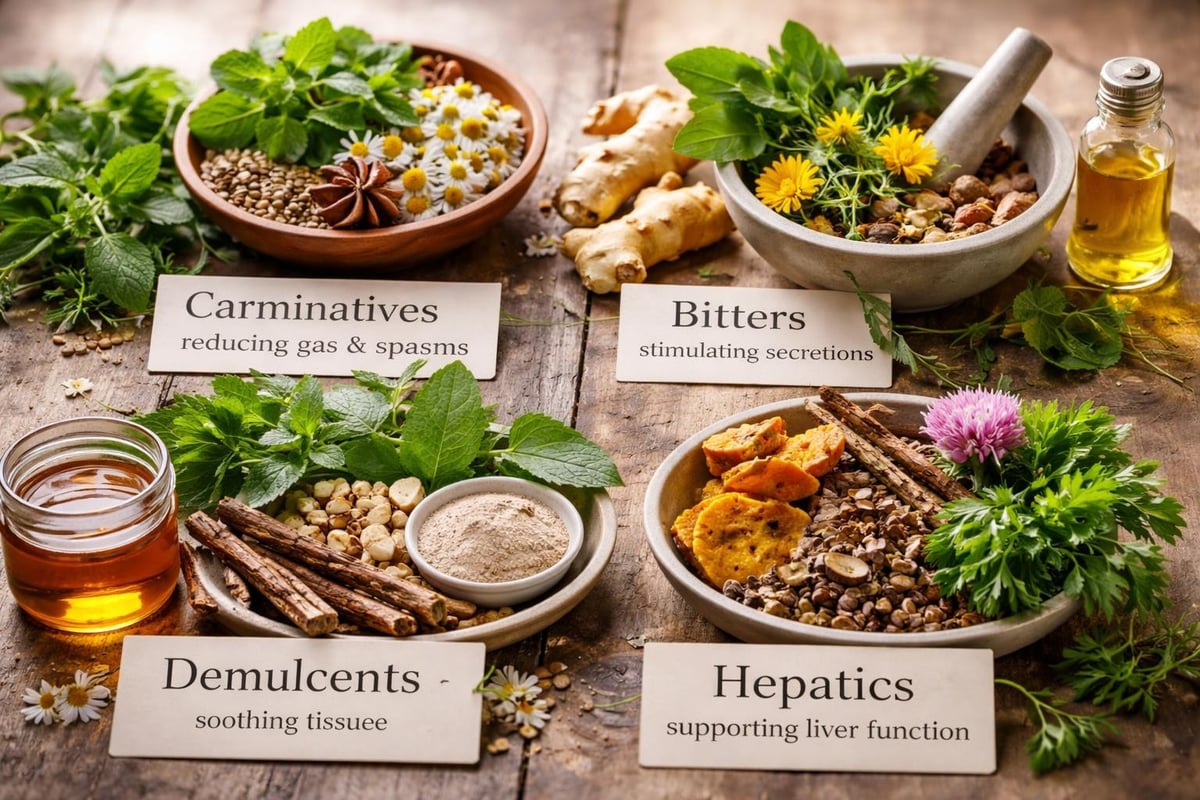
Some herbs are carminatives, meaning they reduce gas, bloating, and spasms by relaxing smooth muscle tissue and encouraging trapped air to move. These are the aromatic plants whose essential oils you can smell instantly when crushed.
Bitters stimulate digestive secretions at every level. They wake up saliva production, encourage stomach acid release, prompt bile flow from the liver and gallbladder, and activate pancreatic enzymes. Just tasting something bitter triggers this cascade, which is why traditional digestive bitters were sipped before meals for centuries across cultures.
Other herbs act as demulcents, coating and soothing inflamed gut tissue with their mucilaginous compounds. Think of them as internal balm for an irritated digestive tract.
Then there are herbs that support the liver and gallbladder, organs often overlooked in digestive wellness yet crucial for breaking down fats, filtering toxins, and maintaining healthy bile production. Supporting liver function can transform digestion from the inside, which is why we explore this connection deeply in our gentle detox approach.
The Gut-Brain-Mood Connection
Here's what makes herbs good for digestion particularly interesting: your gut produces about 95% of your body's serotonin. That means digestive health directly influences mood, anxiety levels, and emotional resilience. Many digestive herbs are also nervines, calming the nervous system whilst supporting gut function. This dual action addresses a truth herbalists have long known: stress disrupts digestion, and poor digestion amplifies stress. Breaking that cycle requires plants that speak to both systems simultaneously, something we explore further in the gut-skin-mood connection.
Time-Tested Plants for Digestive Wellness
Ginger: The Universal Digestive Ally
Ginger (Zingiber officinale) appears in nearly every traditional medicine system for good reason. Its pungent, warming compounds-particularly gingerols and shogaols-stimulate digestive secretions, reduce nausea, and gently increase gut motility without causing cramping.
Research supports what herbalists have practised for millennia. Studies show ginger significantly reduces nausea, including pregnancy-related morning sickness and chemotherapy-induced nausea. It also appears to accelerate gastric emptying, helping food move through the stomach more efficiently.
Practical use: Fresh ginger tea before meals stimulates digestive fire. Grated into food, it enhances both flavour and digestibility. For acute nausea, crystallised ginger or strong ginger infusion often brings rapid relief.
Safety note: Generally very safe, though high doses may interact with blood-thinning medications. Pregnancy use is well-researched and considered safe in food-level amounts.
Peppermint: Cool Relief for Hot Digestive Discomfort
The menthol in peppermint (Mentha × piperita) creates that familiar cooling sensation whilst relaxing the smooth muscles of the digestive tract. This makes it particularly valuable for cramping, bloating, and spasms associated with irritable bowel syndrome (IBS).
Clinical trials demonstrate that enteric-coated peppermint oil capsules significantly reduce IBS symptoms, including abdominal pain and bloating. The enteric coating ensures the oil releases in the intestines rather than the stomach, preventing heartburn in sensitive individuals.
As a tea, peppermint works beautifully after meals to ease fullness and gas. Aromatic herbs like peppermint also lift the spirits whilst settling the stomach, a dual action that makes them especially helpful when stress affects digestion.
Practical use: Steep fresh or dried leaves for 5-7 minutes. For IBS symptoms, consider standardised enteric-coated capsules between meals. Avoid peppermint if you have gastroesophageal reflux disease (GERD), as it can relax the lower oesophageal sphincter.
| Herb | Primary Action | Best For | Form |
|---|---|---|---|
| Ginger | Carminative, prokinetic | Nausea, sluggish digestion | Fresh tea, tincture, food |
| Peppermint | Antispasmodic, carminative | IBS, bloating, gas | Tea, enteric capsules |
| Chamomile | Anti-inflammatory, nervine | Stress-related gut issues | Tea, tincture |
| Fennel | Carminative, galactagogue | Gas, colic, nursing mothers | Seeds (chewed or tea) |
Chamomile: The Gentle Soother
Chamomile (Matricaria chamomilla) bridges the gap between digestive and nervous system support beautifully. Its gentle anti-inflammatory compounds, including apigenin and bisabolol, calm inflamed gut tissue whilst its mild nervine properties ease the anxiety that so often accompanies digestive distress.
Research indicates chamomile's anti-inflammatory effects may benefit conditions like gastritis and inflammatory bowel conditions, though human studies remain limited. Traditionally, it's been offered to colicky infants, upset stomachs, and anyone whose digestion responds poorly to stress.
Practical use: A strong chamomile infusion 20-30 minutes before bed supports both digestion and sleep. During the day, it soothes without sedating. Combine with peppermint and fennel for a comprehensive after-meal tea.
Fennel: Ancient Seed, Modern Relief
Fennel seeds (Foeniculum vulgare) have concluded meals across Mediterranean and Indian cultures for thousands of years. These aromatic seeds contain anethole, a compound that relaxes intestinal muscles and reduces gas formation.
Studies show fennel reduces infantile colic and may improve symptoms of IBS. It's also traditionally used to support milk production in nursing mothers, making it a valuable postpartum herb.
Practical use: Chew half a teaspoon of seeds after meals, or steep crushed seeds for 10 minutes. The act of chewing stimulates saliva production, initiating the digestive cascade even before the fennel's compounds take effect.

Bitter Herbs: Reawakening Digestive Fire
Dandelion Root: From Lawn Weed to Liver Tonic
Dandelion root (Taraxacum officinale) is perhaps the most underestimated herb good for digestion. Its bitter compounds stimulate bile production and flow, supporting fat digestion and helping the liver process toxins more efficiently.
Herbalists often combine liver support with digestive work because these systems are intimately connected. When bile flows freely, fats digest properly, fat-soluble vitamins absorb better, and the whole digestive process becomes smoother. Our detox elixir works with this principle, supporting both liver function and digestive flow.
Research suggests dandelion may support liver function and act as a mild diuretic, though more human studies are needed. Traditional use spans centuries across European, Chinese, and North American indigenous medicine systems.
Practical use: Roasted dandelion root makes a coffee-like decoction. Simmer one tablespoon of dried root in two cups of water for 15 minutes. The roasting reduces bitterness whilst maintaining digestive benefits. Take before meals to stimulate appetite and digestion.
Gentian: The Ultimate Bitter
Gentian root (Gentiana lutea) contains some of the most intensely bitter compounds in the plant world. Just tasting it triggers a powerful digestive response, making it a cornerstone of traditional bitter formulas across Europe.
The bitterness stimulates taste receptors that send signals throughout the digestive system, encouraging the release of gastric juices, bile, and pancreatic enzymes. This is why bitters work best when tasted, not capsulated.
Practical use: A few drops of gentian tincture in water 15-20 minutes before meals awakens digestive capacity. Start small, as the intensity surprises most people. Those with ulcers or high stomach acid should avoid gentian, as it increases acid production.
Yellow Dock: The Gentle Liver Mover
Yellow dock (Rumex crispus) combines mild bitterness with gentle laxative properties from its anthraquinone content. It's particularly helpful when sluggish liver function coincides with constipation, supporting both bile flow and bowel movement.
Lesser-known digestive herbs like yellow dock offer alternatives when common remedies don't quite fit someone's constitution or needs.
Practical use: Tincture or decoction before meals. The laxative effect is mild but reliable, making yellow dock suitable for long-term use in small doses. Avoid during pregnancy and with existing diarrhoea.
Aromatic Carminatives for Gas and Bloating
Cardamom: The Warming Seed
Cardamom (Elettaria cardamomum) brings warming aromatics that reduce gas whilst supporting healthy gut flora. In Ayurvedic tradition, it's considered tridoshic, meaning it balances all constitutional types, a rarity in the herbal world.
Its volatile oils relax intestinal spasms and encourage the movement of trapped gas. Unlike some carminatives, cardamom doesn't create heat in those who already run warm, making it universally applicable.
Practical use: Add crushed pods to chai, coffee, or cooking. Chew a few seeds after meals. The flavour is pleasant enough that compliance rarely becomes an issue.
Caraway: Traditional European Digestive
Caraway seeds (Carum carvi) appear throughout traditional European cuisine, particularly in heavy, gas-producing dishes like cabbage and rye bread. This isn't coincidence. The carvone in caraway prevents gas formation whilst encouraging its release.
Seven essential digestive herbs and roots often include caraway for its reliable action against bloating and its safety profile across all ages.
Practical use: Steep crushed seeds for 10 minutes. Combine with fennel and anise for a traditional "gripe water" that soothes infant colic and adult bloating alike.
Demulcent Herbs for Inflamed Tissues
Marshmallow Root: Coating and Healing
Marshmallow root (Althaea officinalis) contains abundant mucilage that coats and soothes inflamed digestive tissue from mouth to colon. When the gut lining becomes irritated through stress, poor diet, or medication use, demulcents like marshmallow create space for healing.
Practical use: Cold infusion preserves the mucilage better than hot water. Place one tablespoon of dried root in a jar with one cup of cold water. Steep overnight, strain, and drink before meals. The resulting liquid is slippery and slightly sweet.
Slippery Elm: North American Soother
Slippery elm (Ulmus rubra) works similarly to marshmallow, coating irritated tissue with protective mucilage. It's been used traditionally for gastritis, ulcers, and inflammatory bowel conditions.
Sustainability note: Slippery elm is at risk from overharvesting. When possible, choose marshmallow root or plantain leaf as alternatives.
Building Your Digestive Herbal Practice
Starting Simple
- Begin with one herb that addresses your primary digestive pattern
- Taste matters: Bitters must be tasted to work; carminatives work in tea form; demulcents need proper preparation
- Timing influences effectiveness: Bitters before meals, carminatives after, demulcents between meals for inflammation
- Notice patterns: Does stress trigger symptoms? Does specific food cause issues? Let observation guide herb selection
Creating Combinations
Single herbs work beautifully, but thoughtful combinations often address multiple digestive patterns simultaneously. A classic after-dinner tea might include:
- Peppermint (antispasmodic, cooling)
- Fennel (carminative, warming)
- Chamomile (anti-inflammatory, calming)
- Ginger (prokinetic, warming)
This blend addresses gas, cramping, inflammation, and sluggish movement whilst supporting the nervous system.
Working With Constitutional Patterns
Not all herbs good for digestion suit all people equally. Those who run cold and sluggish benefit from warming herbs like ginger, cardamom, and black pepper. Those with heat, inflammation, and quick digestion do better with cooling plants like peppermint, fennel, and chamomile.
Selecting appropriate herbs for digestion requires understanding your body's unique patterns. Do you bloat after eating? Experience burning? Constipation? Loose stools? Each pattern suggests different herbal approaches.
Safety, Quality, and Sourcing
General Safety Considerations
Most digestive herbs have excellent safety profiles, but individual circumstances matter:
- Pregnancy and nursing: Ginger, chamomile, and fennel are generally safe; avoid strong laxatives and high-dose bitters
- Medications: Peppermint may affect drug absorption; bitter herbs can alter stomach pH and medication effectiveness
- Existing conditions: GERD sufferers should avoid peppermint; those with gallstones should consult practitioners before using bile-stimulating herbs
- Allergies: Those allergic to ragweed may react to chamomile (Asteraceae family)
Quality Matters
Not all herbal products contain what their labels claim. Understanding the anatomy of the digestive system and how herbs interact with it helps you evaluate whether a product makes sense for your needs.
Look for:
- Organic certification when possible
- Transparent sourcing from companies that share supplier information
- Proper extraction methods (alcohol for resins and volatile oils, water for mucilage)
- Recent harvest dates for aromatic herbs
- Third-party testing for purity and potency
At Natura Sacra, we source small-batch, research-backed botanical remedies that honour both traditional wisdom and modern quality standards.
Beyond the Cup: Lifestyle Foundations
Herbs good for digestion work best when supported by lifestyle foundations that honour digestive health:
- Eat in a relaxed state: Stress shunts blood away from digestive organs
- Chew thoroughly: Digestion begins with saliva
- Don't drink large amounts with meals: Excessive liquid dilutes digestive juices
- Include bitter foods: Rocket, dandelion greens, and endive stimulate digestion naturally
- Move your body: Gentle movement after meals encourages healthy motility
These practices aren't separate from herbal work. They're the foundation that makes herbs effective.
The Art of Observation
Perhaps the most valuable skill in working with herbs good for digestion is developing your capacity to notice. What time of day do symptoms appear? What foods trigger them? How does stress affect your gut? What happens when you skip meals or eat too quickly?
This quality of attention transforms herb use from symptom management into genuine partnership with your body's wisdom. You begin to notice subtle shifts, early warning signs, and the specific conditions under which your digestion thrives or struggles.
Keeping a Simple Digestive Journal
- Note what you ate and when
- Record any digestive symptoms and their intensity
- Track which herbs you used and their effects
- Notice emotional states and stress levels
- Observe energy, skin clarity, and mood changes
Over weeks and months, patterns emerge that guide you toward the herbs, foods, and practices that truly serve your unique digestive ecosystem.
When to Seek Professional Support
Herbs offer remarkable support for everyday digestive discomfort, but certain symptoms warrant professional assessment:
- Persistent abdominal pain that doesn't respond to dietary changes or herbs
- Unexplained weight loss or changes in appetite
- Blood in stool or black, tarry stools
- Severe or worsening reflux despite lifestyle modifications
- New onset symptoms after age 50
Working with a qualified herbalist or integrative practitioner helps you develop personalised protocols that address root causes rather than just managing symptoms.
Herbs good for digestion offer gentle, time-tested support for the complex ecosystem that transforms food into nourishment. From the warming bite of ginger to the cooling relief of peppermint, the bitter wake-up call of dandelion to the soothing coat of marshmallow, each plant brings unique gifts to digestive wellness. At Natura Sacra, we create small-batch botanical remedies that honour this plant wisdom, supporting your body's natural rhythms through thoughtfully crafted teas, elixirs, and daily rituals that make herbal wellness accessible and deeply effective.