Ontdek zeven essentiële kruiden voor stemmingsverbetering, met praktische tips, traditie en nieuw onderzoek. Vind je ideale kruidenbondgenoot voor dagelijks welzijn.
7 Essentiële Kruiden voor Stemmingsverbetering

De interesse in natuurlijke ondersteuning van de stemming groeit, waarbij steeds meer mensen zich richten op kruiden om het emotionele welzijn te bevorderen. Oude plantenwijsheid ontmoet frisse wetenschappelijke nieuwsgierigheid, wat leidt tot een hernieuwde waardering voor elk zorgvuldig gekozen kruid voor stemmingsverbetering.
Naarmate het onderzoek vordert, groeit ook ons begrip van hoe kruidentradities en modern bewijs kunnen samenwerken. In deze gids nodigen we u uit om zeven essentiële kruiden voor stemmingsverbetering te verkennen. We zullen kijken naar hun culturele wortels, wat de nieuwste studies suggereren, en hoe u ze in uw eigen dagelijkse rituelen kunt verweven voor een stabieler, helderder vooruitzicht.
Stemmingsverbetering begrijpen door middel van kruiden
Stemmingsverbetering, wanneer we er holistisch over spreken, gaat over het koesteren van emotioneel evenwicht en veerkracht in plaats van het najagen van snelle oplossingen. In de kern ondersteunt een kruid voor stemmingsverbetering uw geest en ziel door zachtjes samen te werken met de natuurlijke ritmes van uw lichaam. We zoeken naar kruiden die ons helpen ons lichter, stabieler en meer aanwezig te voelen — of dat nu betekent het verlichten van de last van stress of het uitnodigen van een beetje meer vreugde in onze dagen.
Hoe beïnvloeden deze planten eigenlijk onze stemming? Veel kruiden interageren met de stressrespons van het lichaam en helpen cortisol en andere hormonen te reguleren. Sommige, zoals ashwagandha, worden geacht een overactief zenuwstelsel te kalmeren, terwijl andere de afgifte of het evenwicht van neurotransmitters zoals serotonine en dopamine kunnen bevorderen. Dit is waarom een zorgvuldig gekozen kruid voor stemmingsverbetering zowel onmiddellijke troost als langdurige ondersteuning kan bieden, afhankelijk van hoe en wanneer het wordt gebruikt.
Het is nuttig om het verschil te begrijpen tussen acute en continue ondersteuning. Sommige kruiden schitteren op het moment – denk aan citroenmelisse voor een gespannen geest voor het slapengaan – terwijl andere, zoals heilige basilicum, geleidelijk veerkracht opbouwen wanneer ze dagelijks worden ingenomen. Kruidkundigen spreken vaak over “adaptogenen” (die het lichaam helpen zich aan te passen aan stress) en “nervinen” (die het zenuwstelsel kalmeren). Hier is een snelle vergelijking:
| Kruidencategorie | Belangrijkste voordeel | Typische kruiden |
|---|---|---|
| Adaptogeen | Stressbestendigheid | Ashwagandha, Rhodiola |
| Nervijn | Kalmerend, verzachtend | Citroenmelisse, Passiebloem |
De interesse in het vinden van het juiste kruid voor stemmingsverbetering is snel gegroeid in het VK. In 2024 meldde meer dan een kwart van de volwassenen dat ze een kruidenmiddel hadden geprobeerd voor hun mentale welzijn, wat een aanzienlijke culturele verschuiving weerspiegelt (Gebruik van kruidengeneesmiddelen bij volwassenen in het VK). Deze groeiende nieuwsgierigheid getuigt van een verlangen naar zachte, plantaardige hulpmiddelen.
Natuurlijk zijn kwaliteit en herkomst van belang. Biologische, ethisch geoogste kruiden kunnen het verschil maken in potentie en veiligheid. Ieders constitutie is uniek – wat de ene persoon kalmeert, kan de andere energie geven. Veel mensen verweven kruiden in dagelijkse rituelen, of het nu als ochtendthee is, een tinctuur voor meditatie, of aromatische oliën voor een bewuste pauze.
Veiligheid is altijd onderdeel van het gesprek. Het is verstandig om een gekwalificeerde kruidkundige of zorgverlener te raadplegen, vooral als u medicatie gebruikt of zwanger bent. Kruiden zijn krachtige bondgenoten, maar ze werken het beste wanneer ze zorgvuldig worden gekozen en met zorg worden gebruikt.
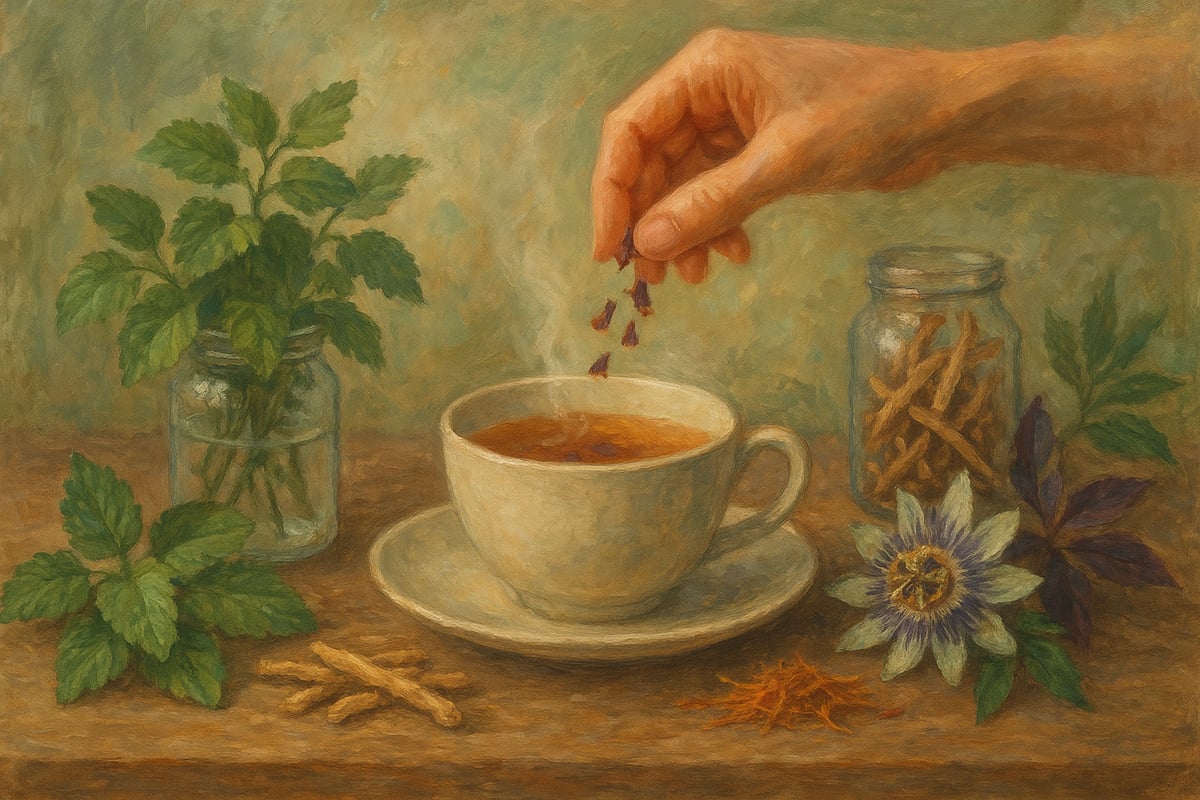
7 Essentiële Kruiden voor Stemming & Emotioneel Welzijn
Het verkennen van de wereld van kruiden voor stemmingsverbetering opent deuren naar eeuwenoude wijsheid en modern onderzoek. Hier zijn zeven essentiële kruiden die vertrouwde bondgenoten kunnen worden voor stemming, veerkracht en dagelijks evenwicht.

1. Sint-janskruid (Hypericum perforatum)
Sint-janskruid staat als een klassiek kruid voor stemmingsverbetering, gekoesterd in Europese kruidentradities. Kruidkundigen hebben lang naar de levendige gele bloemen gegrepen om sombere stemmingen te verlichten en emotionele lichtheid te bevorderen. De plant bevat unieke verbindingen, hypericine en hyperforine, waarvan wordt aangenomen dat ze neurotransmitters die verband houden met stemming zachtjes beïnvloeden.
Moderne studies benadrukken de effectiviteit van Sint-janskruid bij milde tot matige depressie, waarbij het soms gunstig afsteekt tegen conventionele opties (NLM bron). De meeste mensen gebruiken het als thee, tinctuur of handige capsule.
Als u dit kruid voor stemmingsverbetering overweegt, houd er dan rekening mee dat het kan interageren met veel medicijnen, waaronder antidepressiva en anticonceptie. Raadpleeg altijd eerst een professional. Voor degenen die zachte, plantaardige ondersteuning zoeken met een lange geschiedenis, is Sint-janskruid een goede plek om te beginnen.
2. Ashwagandha (Withania somnifera)
Ashwagandha is een gekoesterde wortel in de Ayurveda, vaak gebruikt als kruid voor stemmingsverbetering en stressbestendigheid. De adaptogene aard betekent dat het het lichaam helpt zich aan te passen aan zowel emotionele als fysieke stress, waardoor een gevoel van constante kalmte wordt ondersteund.
Onderzoek toont aan dat Ashwagandha angst kan verminderen en cortisol, het belangrijkste stresshormoon van het lichaam, kan verlagen (PubMed). Veel mensen drinken het als poeder in warme dranken, in capsules voor dagelijks gebruik, of als aardende thee.
Dit kruid voor stemmingsverbetering is geschikt voor wie milde, langdurige ondersteuning zoekt voor drukke, stressvolle levensstijlen. Hoewel het over het algemeen goed wordt verdragen, is het raadzaam Ashwagandha te vermijden bij zwangerschap of bij bepaalde auto-immuunziekten. Begin met een kleine dosis en luister naar uw lichaam.
3. Citroenmelisse (Melissa officinalis)
Citroenmelisse straalt zachte vreugde uit, al lang gebruikt om rusteloze geesten te troosten en zenuwen te kalmeren. Dit naar citroen geurende kruid voor stemmingsverbetering is een favoriet voor wie kalmte en opbeuring zoekt zonder zwaarte. De belangrijkste werkingen zijn mild kalmerend en ondersteunend voor helder denken.
Onderzoek suggereert dat citroenmelisse angst en slaapkwaliteit kan verbeteren (PubMed), waardoor het een veelzijdige bondgenoot is. Geniet ervan als geurige thee, in tinctuur, of door simpelweg verse bladeren te kneuzen voor een rustgevend aroma. Als u meer wilt weten over de kalmerende gaven, ontdek dan onze uitgebreide gids Citroenmelisse voor Vreugde en Kalmte.
Citroenmelisse is ideaal voor mensen die gevoelig zijn voor sterkere kruiden. Begin met een kopje 's avonds en merk de zachte effecten op. Zwangere of schildkliergevoelige personen moeten controleren op interacties.
4. Rhodiola (Rhodiola rosea)
Rhodiola, een veerkrachtige wortel uit Siberische en Scandinavische tradities, schittert als een kruid voor stemmingsverbetering onder druk. Traditioneel wordt het gebruikt om uithoudingsvermogen en emotionele veerkracht te vergroten tijdens barre winters en veeleisende taken.
Als adaptogeen helpt Rhodiola het lichaam vermoeidheid en emotionele dieptepunten te beheersen. Onderzoek wijst op verminderingen van mentale vermoeidheid en milde depressieve symptomen (PubMed). De meeste mensen vinden capsules of extracten het gemakkelijkst voor dagelijks gebruik.
Dit kruid voor stemmingsverbetering is bijzonder nuttig als u te maken heeft met chronische stress of een scherpere focus nodig heeft. Sommigen kunnen rusteloosheid of levendige dromen ervaren, dus begin met een lage dosis en vermijd laat op de dag als u gevoelig bent.
5. Passiebloem (Passiflora incarnata)
Passiebloem, met zijn ingewikkelde bloemen, is een gekoesterd kruid voor stemmingsverbetering, vooral voor degenen die zich gespannen voelen of moeite hebben om te ontspannen. Zowel in Amerikaanse als Europese tradities gebruikt, staat passiebloem bekend om zijn kalmerende en slaapondersteunende eigenschappen.
Studies suggereren dat het angst kan verlichten en een rustgevende slaap kan bevorderen (PubMed). Veel mensen genieten van passiebloem als een zachte avondthee of tinctuur, waardoor het deel uitmaakt van een rustgevend bedtijdritueel.
Als u op zoek bent naar een kruid voor stemmingsverbetering dat zacht maar effectief is, dan is Passiebloem een prachtige keuze. Het is over het algemeen veilig, maar zwangere vrouwen of vrouwen die borstvoeding geven moeten advies inwinnen voordat ze het gebruiken.
6. Saffraan (Crocus sativus)
Saffraan, de kostbare roodgouden draden van de krokusbloem, verheldert al eeuwenlang de stemming in de kruidenkunde van het Midden-Oosten en de Middellandse Zee. Dit unieke kruid voor stemmingsverbetering staat bekend om zijn stemmingsverhogende en cognitieve effecten, zelfs in kleine hoeveelheden.
Recent onderzoek toont aan dat de effecten van saffraan vergelijkbaar kunnen zijn met sommige standaard antidepressiva voor milde tot matige depressie (PubMed). Het wordt gebruikt in culinaire gerechten, theeën of geconcentreerd in capsules.
Hoewel saffraan prijzig kan zijn, is een beetje al voldoende. Kwaliteit en zuiverheid zijn belangrijk, dus kies vertrouwde bronnen. Dit kruid voor stemmingsverbetering is krachtig in kleine doses; vermijd grote hoeveelheden en raadpleeg een arts als u zwanger bent.
7. Heilige basilicum (Ocimum sanctum/Tulsi)
Heilige Basilicum, of Tulsi, wordt in de Ayurveda vereerd voor het voeden van zowel stemming als geest. Het is een geliefd kruid voor stemmingsverbetering, bekend om zijn adaptogene ondersteuning van stresshormonen en emotionele helderheid.
Studies tonen aan dat heilige basilicum kan helpen bij angst en milde depressie (PubMed). Veel mensen genieten ervan als geurige thee, tinctuur of verse bladinfusie, vaak als onderdeel van een ochtend- of avondritueel.
Dit kruid voor stemmingsverbetering past prachtig in de dagelijkse zelfzorg. Hoewel het over het algemeen veilig is, moeten degenen die bloedverdunnende medicatie gebruiken of zwanger zijn voorzichtig zijn en een professional raadplegen.
Hoe u het juiste kruid kiest voor uw stemmingsbehoeften
Het vinden van het juiste kruid voor stemmingsverbetering is een persoonlijke reis, gevormd door uw unieke lichaam, levensstijl en emotionele ritmes. Wij geloven dat verstandig kiezen betekent traditie, onderzoek en zelfbewustzijn combineren.
Uw Unieke Constitutie Beoordelen
Ieder mens bewandelt een uniek pad naar welzijn. Voordat u een kruid voor stemmingsverbetering kiest, neemt u de tijd om uw energiepatronen, gevoeligheden en wat u zoekt – kalmte, helderheid of opbeuring – op te merken. Als u bijvoorbeeld de neiging heeft om nerveus of angstig te zijn, kunnen kalmerende kruiden zoals citroenmelisse of passiebloem het beste bij u passen. Als u vaak traag of mentaal mistig bent, kunnen energiegevende kruiden zoals rhodiola of heilige basilicum nuttiger zijn.
Kruidkundigen hebben het vaak over 'constitutie' – uw fysieke en emotionele gesteldheid. Sommige mensen gedijen goed met stimulerende planten, terwijl anderen zachte ondersteuning nodig hebben. Houd rekening met uw dagelijkse routine, stressfactoren en hoe u reageert op veranderingen. Voor meer inspiratie over het afstemmen van kruiden op uw stemming, verkent u onze gids over kruiden die vreugde en veerkracht ondersteunen.
Wanneer u uw keuze met nieuwsgierigheid en zorg benadert, vindt u het kruid voor stemmingsverbetering dat echt aan uw behoeften voldoet.
Kwaliteit, Herkomst en Bereiding Zijn Belangrijk
De kwaliteit van het door u gekozen kruid voor stemmingsverbetering maakt het verschil. Zoek naar biologische, ethisch verkregen planten die in gezonde grond zijn geteeld, vrij van pesticiden. Kleine batches en ambachtelijke bereidingen bewaren vaak meer van de subtiele eigenschappen van een kruid, waardoor de potentie en versheid gewaarborgd blijven.
Hoe u uw kruid bereidt, is ook belangrijk. Theeën extraheren zachtjes kalmerende stoffen, tincturen bieden geconcentreerde ondersteuning en capsules bieden gemak voor drukke dagen. Sommige kruiden komen het best tot hun recht als verse infusies, terwijl andere het beste gedroogd of gepoederd kunnen worden. Let op kleur, aroma en zelfs het verhaal achter uw bron – deze details kunnen uw verbinding met de plant verdiepen.
Een kruid kiezen voor stemmingsverbetering gaat niet alleen over wat u inneemt, maar ook over hoe u het proces en de plant zelf eert.
Veiligheid, interacties en wanneer professionele begeleiding te zoeken
Hoewel kruiden een lange geschiedenis van veilig gebruik hebben, is het belangrijk om hun kracht te respecteren. Sommige kruiden interageren met medicijnen of zijn niet geschikt tijdens zwangerschap of borstvoeding. Als u gezondheidsproblemen heeft, of als u voorgeschreven medicatie gebruikt, controleer dan altijd op mogelijke interacties voordat u een nieuw kruid voor stemmingsverbetering begint.
Een gekwalificeerde kruidkundige of zorgverlener kan u begeleiden bij het maken van veilige, zelfverzekerde keuzes. Zij kunnen u helpen uw aanpak op maat te maken, gerenommeerde merken voor te stellen en ervoor te zorgen dat uw kruid voor stemmingsverbetering past bij uw welzijnsdoelen. Voor betrouwbaar onderzoek en gemeenschapsondersteuning, zoek naar op feiten gebaseerde bronnen of lokale beoefenaars.
Uw reis met kruidenondersteuning is het meest voedzaam wanneer u wijsheid, veiligheid en een geest van zacht experimenteren combineert.
Dagelijkse Rituelen en Praktijken voor Stemmingsverbetering
In ons dagelijks leven helpen rituelen ons te aarden en brengen ze een zachte structuur in ons welzijn. Wanneer we een kruid voor stemmingsverbetering uitnodigen in deze momenten, creëren we ruimte voor zowel traditie als wetenschap om ons te ondersteunen. Stel je voor dat je de ochtend begint met een dampende kop citroenmelissethee, of 's middags even pauzeert om een paar druppels ashwagandha-tinctuur aan water toe te voegen. Deze kleine handelingen worden ankers, die ons terugleiden naar balans.
Kruidkundigen weten al lang dat consistentie de sleutel is. Regelmatig een kalmerende mix drinken of dagelijks op hetzelfde tijdstip een tinctuur gebruiken, kan het lichaam helpen het kruid voor stemmingsverbetering beter te herkennen en erop te reageren. Kruiden verweven in rituelen, of het nu een mindful theepauze is of een avondbad, verandert zelfzorg in een voedzame gewoonte.
Voor degenen die van creativiteit houden, kan het mengen van kruiden een vreugdevolle praktijk zijn. Probeer passiebloem en heilige basilicum te combineren voor een rustgevende bedtijdinfusie, of voeg een snufje saffraan toe aan uw favoriete kruidige chai. Als u nieuwsgierig bent naar seizoensgebonden benaderingen, ontdek dan inspirerende manieren om met planten te werken voor emotionele veerkracht in onze gids Stemmingsdips met de Seizoenen.
Rituelen werken het beste wanneer ze worden gecombineerd met mindfulness-oefeningen. Journaling, zachte beweging of een paar diepe ademhalingen naast uw kruidenroutine kunnen u helpen subtiele veranderingen in stemming en energie op te merken. Na verloop van tijd kunt u patronen ontdekken en zien welke kruiden en rituelen u echt opbeuren.
Vertrouw bovenal op uw intuïtie en sta uzelf toe te experimenteren. De wereld van kruidenondersteuning voor de stemming is rijk aan mogelijkheden, en uw dagelijkse rituelen zijn het canvas waarop u uw eigen pad naar emotioneel welzijn schildert.
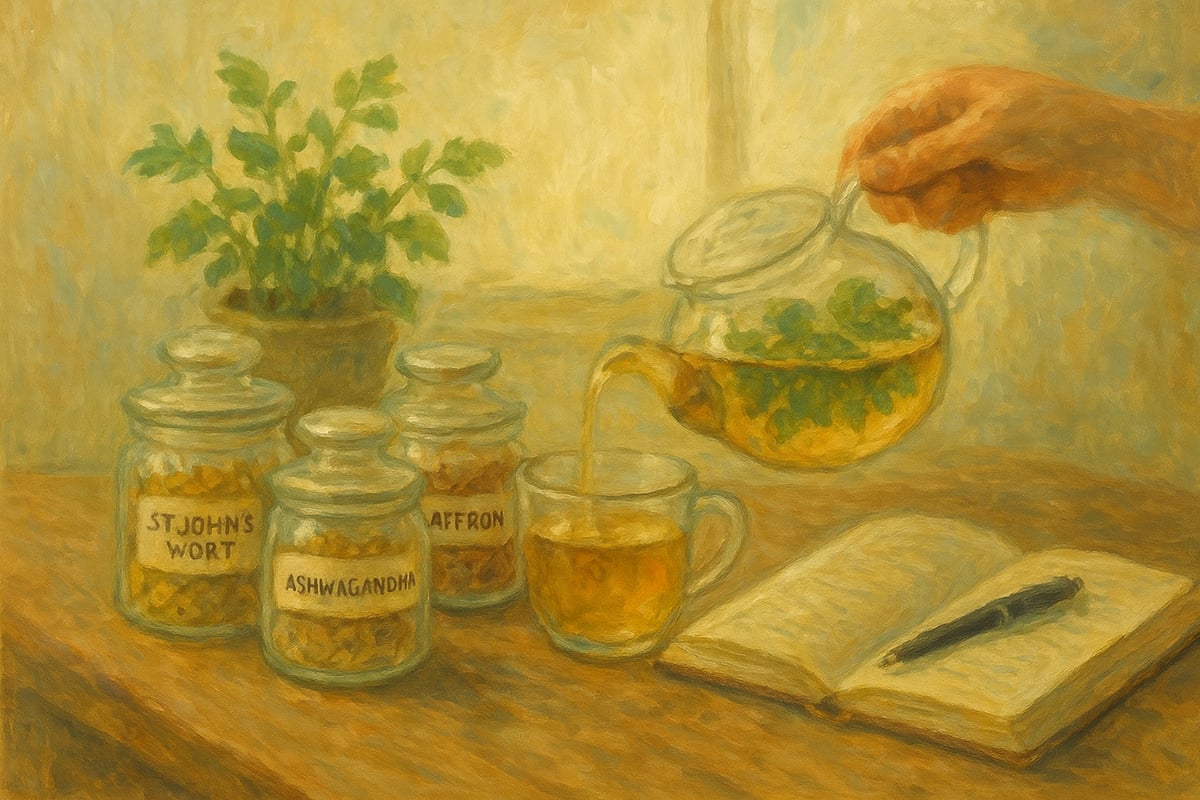
De toekomst van kruidenondersteuning voor de stemming
Terwijl we vooruitkijken, betreedt de wereld van kruiden voor stemmingsverbetering een inspirerend nieuw tijdperk. De vraag naar zachte, effectieve stemmingsondersteuning neemt toe, en kruidenwijsheid ontmoet technologie op manieren die onze voorouders zich nauwelijks konden voorstellen.
Gepersonaliseerde kruidenmengsels zullen de norm worden. Nu steeds meer mensen op zoek zijn naar maatwerk, zien we een verschuiving naar formules die rekening houden met individuele constituties, levensstijlen en emotionele behoeften. Digitale platforms helpen nu stemmingsveranderingen bij te houden en aanpassingen voor te stellen, waardoor het gemakkelijker dan ooit is om subtiele verschuivingen op te merken. Ook de integratie met de reguliere geestelijke gezondheidszorg groeit, aangezien therapeuten en huisartsen de complementaire rol van plantenmiddelen beginnen te erkennen.
Het onderzoekslandschap breidt zich snel uit. Lopende studies werpen licht op zowel aloude favorieten als minder bekende planten. Kruiden zoals saffraan en ashwagandha, ooit als niche beschouwd, worden nu serieus genomen door de wetenschappelijke gemeenschap.
Duurzaamheid komt ook op de voorgrond. Ethische wildpluk en transparante inkoop zijn belangrijker dan ooit, omdat bewuste kruidkundigen en consumenten zowel plantenpopulaties als de gemeenschappen die ervan afhankelijk zijn, willen beschermen.
Waar u zich ook bevindt op uw kruidenreis voor stemmingsverbetering, nieuwsgierig blijven is de sleutel. De toekomst belooft veel goeds, aangezien er nieuw bewijs verschijnt en oude kennis zijn plaats vindt naast moderne inzichten. We moedigen u aan om te blijven verkennen, vragen te stellen en betrouwbare bronnen te zoeken terwijl u door dit evoluerende landschap navigeert.
Terwijl u deze zeven essentiële kruiden en de manieren waarop ze uw stemming zachtjes kunnen ondersteunen verkent, bedenk dan dat de reis naar emotioneel welzijn diep persoonlijk is. Of u nu een kalmerende thee mengt voor rustige avonden of helderheid zoekt voor drukke dagen, het vinden van de juiste plantaardige bondgenoten kan het verschil maken. Als u klaar bent om deze eeuwenoude remedies in uw eigen rituelen op te nemen en de voordelen ervan in het dagelijks leven te ervaren, nodigen wij u uit om onze collectie Mentale Welzijn & Emotioneel Welzijn te verkennen voor plantaardige ondersteuning voor helderheid, focus en emotionele balans. Uw pad naar een opgewekt, evenwichtig leven begint met een enkele, bewuste keuze.