Discover the top herbal tea varieties for everyday wellness. From chamomile to nettle, learn how plant remedies support sleep, stress, and vitality.
Top Herbal Tea: A Guide to Plant Remedies for Wellbeing

Stepping into the world of herbal tea opens a doorway to ancient plant wisdom that remains just as relevant today. Whether you're seeking better sleep, calmer nerves, or simply a warming ritual to anchor your day, the top herbal tea varieties offer gentle, time-tested support that works with your body rather than against it. Unlike caffeinated teas from the Camellia sinensis plant, herbal infusions-also called tisanes-draw on roots, flowers, leaves, and seeds from a diverse botanical family. Each plant carries its own intelligence, shaped by centuries of traditional use and increasingly supported by modern research. Understanding which herbs serve which purposes transforms your daily cuppa from a simple beverage into a meaningful wellness practice.
What Makes a Top Herbal Tea Worth Drinking
Not all herbal teas are created equal. The most valuable infusions combine traditional wisdom with emerging scientific validation, offering tangible benefits you can feel in your body and mind. A top herbal tea typically demonstrates a few key qualities: consistent use across multiple healing traditions, a favourable safety profile for regular consumption, and some degree of research backing its traditional applications.
Safety and Quality Foundations
Before exploring specific plants, it's worth understanding what makes herbal tea safe and effective. Quality matters immensely-organic cultivation, proper harvesting times, and careful drying all preserve the volatile oils and active compounds that give herbs their therapeutic properties. General herbal safety includes considering individual health conditions, medications, and life stages like pregnancy or breastfeeding.
Key safety considerations include:
- Starting with recommended doses (typically 1-3 cups daily for most herbs)
- Observing how your body responds over several days
- Rotating herbs rather than using the same blend indefinitely
- Consulting healthcare providers when managing chronic conditions
- Sourcing from reputable suppliers who test for contaminants
The World Health Organization provides comprehensive guidelines on herbal processing that ensure quality and safety standards are met.
Chamomile: The Gentle Nervine
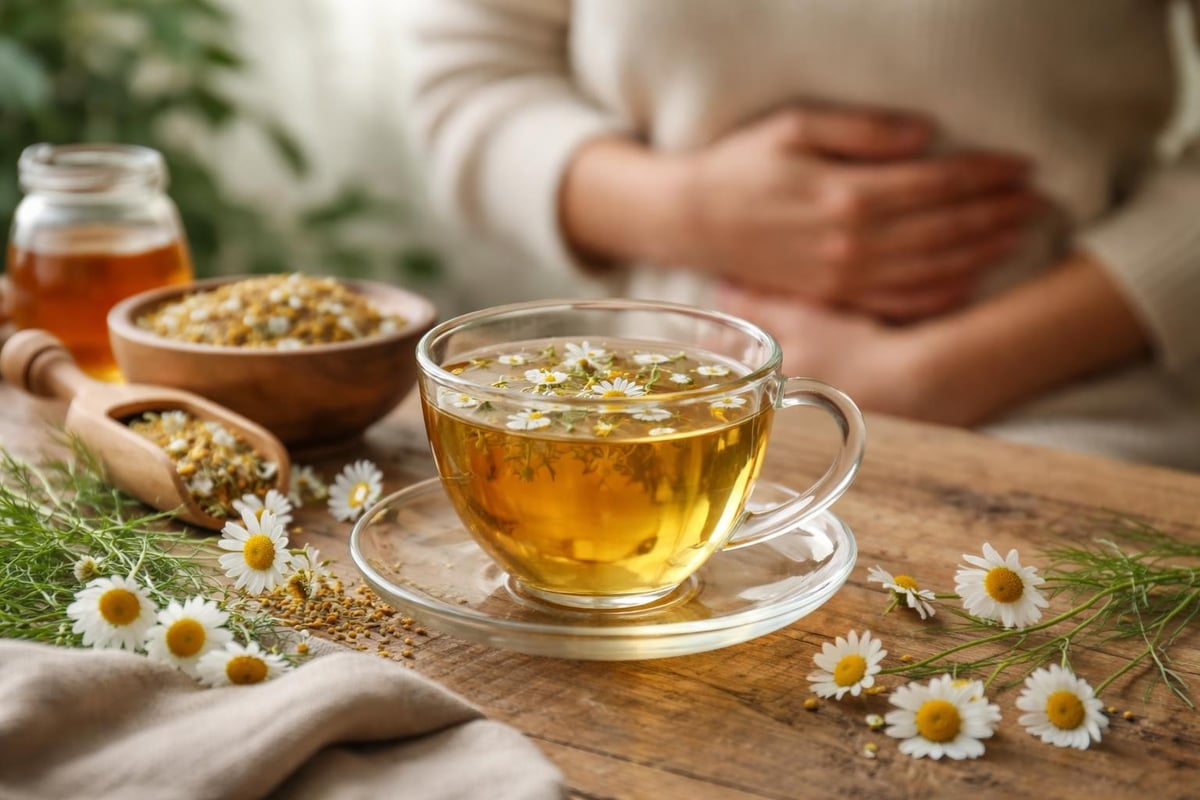
Perhaps the most beloved top herbal tea worldwide, chamomile (Matricaria chamomilla) has earned its reputation through millennia of use across European, Middle Eastern, and North American traditions. The small daisy-like flowers contain apigenin, a flavonoid that binds to certain receptors in the brain, potentially promoting relaxation without sedation.
Traditional herbalists reach for chamomile when someone needs gentle calming-the kind that soothes rather than heavily sedates. It's particularly valued for nervous tension that manifests in the digestive system, making it helpful for stress-related stomach upset. Research suggests chamomile may support sleep quality and reduce anxiety symptoms, though most studies use concentrated extracts rather than tea.
Practical Use and Preparation
For the best chamomile infusion, use 1-2 teaspoons of dried flowers per cup and steep covered for 10-15 minutes. The cover matters-it prevents the volatile oils from escaping with the steam. The longer steep extracts more of the beneficial compounds while developing a richer, slightly apple-like flavour.
Chamomile works beautifully as part of evening rituals for rest, especially when combined with other calming herbs like linden or passionflower. Most people can safely enjoy 1-3 cups daily, though those with ragweed allergies should introduce it cautiously as cross-reactions occasionally occur.
Peppermint: Digestive Comfort in a Cup
When digestive discomfort strikes, peppermint (Mentha × piperita) stands as one of the top herbal tea choices for quick, reliable relief. The menthol and other volatile oils in peppermint leaves have carminative properties-they help expel gas, ease cramping, and relax the smooth muscles of the digestive tract.
Harvard Health discusses peppermint alongside chamomile and ginger as particularly well-studied herbal teas. Research supports peppermint's effectiveness for irritable bowel syndrome symptoms, with several clinical trials demonstrating reduced abdominal pain and bloating.
| Digestive Action | How Peppermint Helps | Best Used For |
|---|---|---|
| Antispasmodic | Relaxes intestinal muscles | Cramping, IBS |
| Carminative | Reduces gas formation | Bloating, discomfort |
| Cooling | Calms inflammation | Nausea, heat-related upset |
Beyond digestion, peppermint's refreshing nature makes it useful for mental clarity and alertness-a stimulating alternative to caffeinated options. The cooling sensation can also provide relief during hot flashes or when feeling overheated.
Steep 1 tablespoon of fresh leaves or 1 teaspoon dried in just-boiled water for 5-7 minutes. Peppermint is generally safe for most people, though those with gastroesophageal reflux should use it cautiously as the relaxing effect may worsen acid reflux in some individuals. You'll find peppermint as a key player in many digestive and detox formulations.
Nettle: The Nutritive Powerhouse
Stinging nettle (Urtica dioica) might seem an unlikely top herbal tea candidate given its infamous sting when fresh, but once dried or cooked, it transforms into one of the most nourishing plant allies available. Traditional European herbalism prized nettle as a spring tonic-the perfect remedy after winter's heaviness to restore vitality and clear stagnation.
What makes nettle exceptional is its dense nutritional profile. The leaves contain significant amounts of iron, calcium, magnesium, and vitamins A, C, and K, alongside chlorophyll and flavonoids. While you shouldn't rely on tea alone for nutritional needs, regular nettle infusions do provide a meaningful mineral boost, particularly when steeped long and strong.
Beyond Nutrition: Nettle's Wider Applications
Herbalists often turn to nettle for seasonal allergies, as some research suggests it may help modulate histamine response. It's also traditionally used to support kidney function and as a gentle diuretic that doesn't deplete potassium the way pharmaceutical diuretics can. The plant has mild anti-inflammatory properties that make it useful for joint discomfort and gout.
For a proper medicinal nettle infusion, use a generous handful (about 1 ounce) of dried leaf in a quart jar, fill with boiling water, cover, and steep for 4-8 hours or overnight. This long infusion extracts the minerals and creates a rich, green, slightly earthy brew. Strain and drink 2-3 cups throughout the day. You can learn more about nettle's versatility and traditional uses.
Nettle's key benefits include:
- Rich mineral content supporting bones, blood, and energy
- Potential allergy support through histamine modulation
- Gentle support for kidney and urinary tract health
- Mild anti-inflammatory action for joints
- Nourishing tonic for hair, skin, and nails
Nettle is safe for long-term use in most people. Some may experience mild stomach upset initially, which usually resolves with continued use or by taking it with food.
Ginger: Warming Digestive Stimulant
Fresh or dried ginger root (Zingiber officinale) creates a top herbal tea that brings heat and movement to sluggish systems. Traditional Chinese and Ayurvedic medicine both prize ginger for its ability to kindle digestive fire, improve circulation, and dispel cold from the body. The pungent compounds-gingerols and shogaols-give ginger its characteristic bite and therapeutic actions.
Where peppermint cools and relaxes, ginger warms and stimulates. It's particularly valuable for nausea of various causes, including morning sickness, motion sickness, and post-surgical nausea. Multiple studies support its anti-nausea effects, making it one of the better-researched digestive herbs.
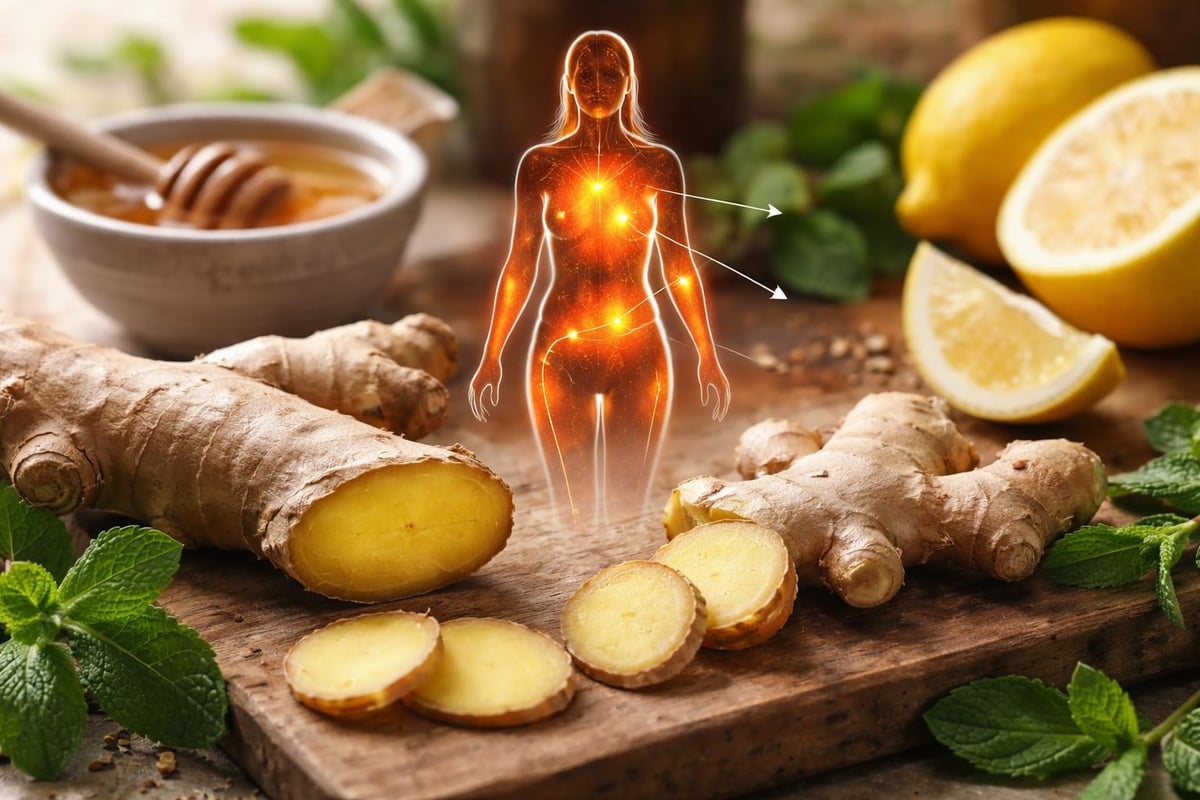
Ginger also demonstrates anti-inflammatory properties that may help with osteoarthritis pain and muscle soreness. Some research suggests regular ginger consumption might support healthy blood sugar metabolism, though more human studies are needed.
For tea, slice a thumb-sized piece of fresh ginger (or use 1 teaspoon dried), simmer in 2 cups water for 10-15 minutes, and strain. The longer you simmer, the stronger and spicier the brew becomes. Honey and lemon make excellent additions. Most people tolerate ginger well, though very high doses may cause heartburn in sensitive individuals. Those on blood-thinning medications should discuss regular medicinal use with their healthcare provider.
Passionflower: For Anxious Minds
When racing thoughts prevent rest or anxiety creates that tight, wired feeling, passionflower (Passiflora incarnata) offers calm without grogginess. This beautiful flowering vine from the Americas has been used in traditional healing for nervous tension, sleep difficulties, and physical manifestations of anxiety like muscle tension.
Passionflower contains flavonoids and alkaloids that may increase gamma-aminobutyric acid (GABA) in the brain-the neurotransmitter that promotes relaxation and reduces neural excitability. Several clinical trials suggest passionflower can reduce anxiety symptoms comparably to some pharmaceutical anxiolytics, though with fewer side effects.
This makes passionflower a particularly valuable top herbal tea for those experiencing generalized anxiety, especially when it disrupts sleep. It combines well with other nervines like chamomile and linden for a more comprehensive calming blend. Many people find it helpful taken 30-60 minutes before bed or during the day when anxiety peaks.
Steep 1-2 teaspoons of dried herb in covered hot water for 10-15 minutes. The taste is mild and slightly grassy. While generally safe for short to medium-term use, passionflower shouldn't be combined with sedative medications without professional guidance. Pregnant women should avoid it as traditional use includes uterine-stimulating properties.
Linden: The Heart's Gentle Friend
Linden flowers (Tilia spp.) create one of Europe's most cherished top herbal tea traditions. The delicate, honey-scented blossoms have been used for centuries to calm anxious hearts-both literally and figuratively. Linden acts as both a nervine and a cardiovascular tonic, making it especially suited for stress that manifests as heart palpitations, high blood pressure, or chest tightness.
Traditional herbalists describe linden as cooling and moistening, perfect for hot, dry, tense conditions. It's the herb for someone who feels wound too tight, overheated, or emotionally on edge. The flowers contain flavonoids, mucilage, and volatile oils that together create a gentle sedative and mild diaphoretic effect (promoting healthy sweating).
Linden's Traditional Applications
Beyond its calming properties, linden has long been used at the onset of feverish colds and flu. The gentle diaphoretic action helps the body regulate temperature naturally. The mucilaginous compounds also soothe irritated mucous membranes, making linden useful for dry coughs and throat irritation.
You can explore linden's nervous system benefits in greater depth. For tea, use 1-2 tablespoons of dried flowers per cup, steep covered for 10-15 minutes, and enjoy the subtle sweetness. Linden is beautifully safe for most people and gentle enough for children and elders. The only caution is for those with heart conditions-whilst traditionally used to support cardiovascular health, any medicinal use alongside heart medications should be discussed with a healthcare provider.
Rooibos: The Caffeine-Free Comfort Tea
From South Africa comes rooibos (Aspalathus linearis), a naturally caffeine-free top herbal tea rich in unique antioxidants called aspalathin and nothofagin. Unlike true tea, rooibos creates a naturally sweet, smooth brew that needs no additions, making it popular with those transitioning away from caffeinated beverages.
The antioxidant content in rooibos rivals or exceeds that found in green tea, with research suggesting potential benefits for heart health, blood sugar regulation, and reducing oxidative stress. Traditional use in South Africa includes digestive upset in infants and skin conditions when applied topically.
| Rooibos Benefits | Traditional Use | Research Status |
|---|---|---|
| Antioxidant-rich | General wellness tonic | Well-documented in studies |
| Naturally caffeine-free | Safe for all ages | Confirmed safe profile |
| Anti-inflammatory | Skin conditions, allergies | Preliminary research promising |
| Mineral content | Bone health support | Some supporting evidence |
Rooibos requires no special preparation-steep like regular tea for 5-10 minutes. Its robust flavour stands up to milk and sweeteners while remaining pleasant on its own. The safety profile is excellent with no known significant interactions or contraindications. It's become a staple in many herbal tea blends for its pleasant taste and beneficial properties.
Tulsi: Sacred Adaptogen
Holy basil, or tulsi (Ocimum sanctum), holds sacred status in Ayurvedic medicine as an adaptogen-an herb that helps the body adapt to various stressors. This fragrant member of the mint family demonstrates remarkable versatility, traditionally used for everything from respiratory support to mental clarity to blood sugar balance.
Modern research on tulsi shows promise for stress resilience, with studies suggesting it may help normalize cortisol levels and improve stress-related symptoms. The leaves contain eugenol, ursolic acid, and rosmarinic acid-compounds with anti-inflammatory, antimicrobial, and antioxidant properties.
As a top herbal tea for daily wellness, tulsi works differently than calming nervines like chamomile. Rather than sedating, it helps build resilience over time, supporting the body's ability to handle stress more effectively. Many people report improved mental clarity, stable energy, and better mood with regular use.
Choosing and Using Tulsi
Three main varieties exist: Rama (green, milder), Krishna (purple, more pungent), and Vana (wild, complex). All share similar properties though flavour profiles differ. Steep 1-2 teaspoons per cup for 5-7 minutes. The taste is peppery, slightly clove-like, and warming.
Tulsi is generally safe for most adults with regular use. Those with diabetes should monitor blood sugar as tulsi may have mild hypoglycemic effects. Pregnant women should avoid medicinal amounts as traditional use includes emmenagogue (menstruation-promoting) properties. Tulsi features in formulations designed to support stress and mental wellness.
Rose: Beauty from Within
Rose petals (Rosa spp.) create a top herbal tea that's as much about emotional nourishment as physical benefit. Traditional Chinese Medicine and Unani Tibb medicine both prize rose for cooling excess heat, soothing the heart, and promoting beauty from within. The petals contain polyphenols, vitamin C, and aromatic compounds that offer gentle astringent and anti-inflammatory properties.
Rose's traditional applications include:
- Cooling and soothing inflamed tissues
- Supporting skin health internally and externally
- Gentle nervous system support for grief and heartache
- Mild digestive aid, especially for liver heat
- Opening and uplifting for low mood
The emotional dimension of rose shouldn't be overlooked. Herbalists often reach for rose when someone needs softening-when they're too hard on themselves, when grief has closed the heart, or when stress has created rigidity. This gentle opening quality makes rose valuable in emotional and hormonal balance blends.
For tea, use 1-2 tablespoons of dried petals (ensure they're food-grade and unsprayed), steep in hot water for 5-7 minutes, and enjoy the delicate floral notes. Rose is wonderfully safe with virtually no contraindications. Choose organic petals from reputable sources as commercially grown roses often carry heavy pesticide residues.
Hibiscus: Tart and Heart-Healthy
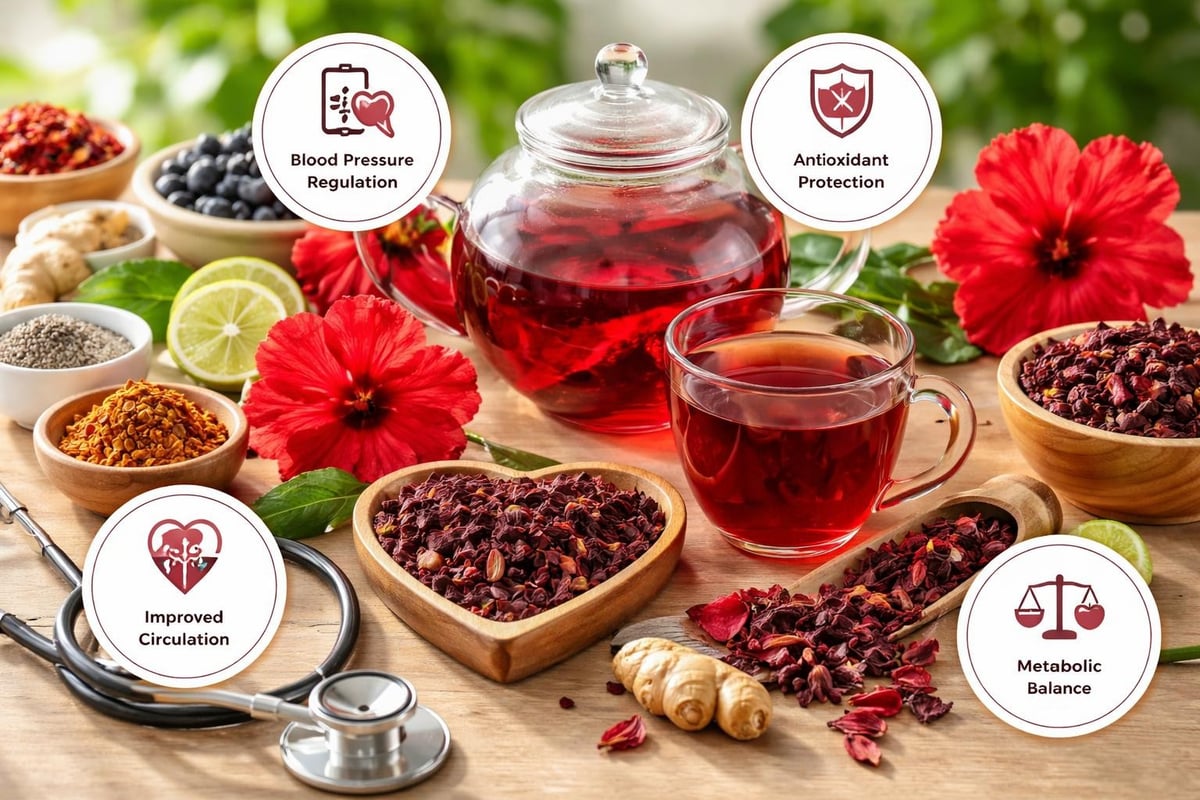
The deep crimson infusion of hibiscus flowers (Hibiscus sabdariffa) brings a pleasantly tart, cranberry-like flavour alongside impressive cardiovascular benefits. This tropical flower has been studied more extensively than many herbal teas, with research suggesting it may help support healthy blood pressure levels.
Multiple clinical trials indicate that regular hibiscus tea consumption may lower both systolic and diastolic blood pressure in people with mild hypertension. The anthocyanins and other polyphenols in hibiscus appear to work through several mechanisms, including ACE inhibition and improved endothelial function. Today's Dietitian explores medicinal herbal teas including hibiscus for cardiovascular support.
Beyond blood pressure, hibiscus demonstrates antioxidant activity that may support liver health and metabolic function. Some research suggests benefits for cholesterol levels and blood sugar regulation, though more studies are needed.
Steep 1-2 teaspoons of dried flowers in hot water for 5-10 minutes. The resulting ruby-red tea is naturally tart and refreshing hot or iced. Sweetening with honey creates a lovely balance. Most people tolerate hibiscus well, though those on blood pressure medication should monitor levels as the effects may be cumulative. Very high doses may have mild diuretic effects.
Creating Your Herbal Tea Practice
Understanding individual herbs forms the foundation, but creating a sustainable top herbal tea practice means weaving these plants into daily rhythms that support your specific wellness needs. Rather than drinking herbs randomly, consider matching them to the times and situations where you need support most.
Morning, Midday, and Evening Formulas
Morning support might include nettle for mineral nourishment, ginger for digestive activation, or tulsi for steady energy and stress resilience. These herbs don't provide caffeine's jolt but instead offer sustainable vitality that builds over time.
Midday blends could address afternoon slumps or digestive needs after meals. Peppermint aids digestion, rooibos provides antioxidants without interfering with sleep later, and rose offers gentle emotional support during stressful workdays.
Evening formulas naturally lean toward nervines-chamomile, passionflower, and linden help transition from day's demands into restorative rest. These combine beautifully in sleep-supporting blends designed to work with your body's natural wind-down process.
Rotating and Combining Herbs
While the top herbal tea varieties are generally safe for regular use, rotating between different herbs or blends prevents your body from becoming too accustomed to any single plant. It also provides a broader spectrum of benefits. Consider using one herb or blend for 5-6 days, then switching to another for variety.
Combining herbs often creates more comprehensive support than single herbs alone. Herbalists call this synergy-the whole becoming greater than the sum of parts. A sleep blend might include chamomile's gentle calm, passionflower's anxiolytic effects, and linden's heart-soothing properties. A digestive formula could pair peppermint's antispasmodic action with ginger's warming stimulation and chamomile's nervous stomach support.
When creating or choosing blends, consider both therapeutic goals and flavour harmony. The best formulas address your needs whilst tasting pleasant enough to drink consistently. You'll find thoughtfully crafted combinations at Natura Sacra's tea collection, where traditional knowledge meets modern understanding.
Brewing Techniques That Matter
The quality of your herbs matters, but so does how you prepare them. Different plant parts require different approaches to extract their beneficial compounds effectively. Understanding these basics ensures you're getting the most from your top herbal tea choices.
Flowers and leaves (chamomile, peppermint, nettle, rose): Generally steep 5-15 minutes in water just off the boil. Cover during steeping to prevent volatile oils escaping.
Roots and bark (ginger): Require simmering 10-20 minutes to extract harder-to-reach compounds. Use the gentlest simmer that maintains heat.
Seeds (fennel, cardamom): Lightly crush before steeping to release oils, steep 10-15 minutes covered.
Long infusions (nettle, oatstraw): Use large amounts of dried herb, steep 4-8 hours for maximum mineral extraction.
Water quality affects both taste and therapeutic value. Filtered or spring water creates cleaner, more pleasant infusions than heavily chlorinated tap water. Temperature matters too-boiling water destroys some delicate volatile compounds, so letting water cool for a minute after boiling suits most flowers and leaves.
Sourcing Quality Herbs
Not all dried herbs deliver the same potency or safety. The top herbal tea experiences come from plants grown, harvested, and processed with care. Organic certification matters-it ensures herbs aren't carrying pesticide residues that accumulate with regular consumption. Beyond organic, look for suppliers who can speak to harvest times, drying methods, and freshness.
Colour, aroma, and flavour tell you much about quality. Chamomile should smell distinctly apple-like, peppermint should retain bright green colour and strong menthol aroma, rose petals should show deep colour and floral scent. Faded, dull, or scentless herbs have likely lost potency through age or poor storage.
Storage at home matters too. Keep dried herbs in airtight containers away from light, heat, and moisture. Most maintain good potency for 6-12 months when properly stored, though some (like peppermint) retain quality longer. When herbs no longer smell vibrant, their therapeutic value has diminished even if they're technically safe to consume.
The Herbal Academy's safety continuum helps contextualize the safety spectrum of different herbs, supporting informed choices about which plants suit your needs.
Understanding Your Body's Response
The top herbal tea for someone else might not be ideal for you-individual constitution, current health status, and specific needs all influence which herbs serve you best. Learning to observe your body's responses helps refine your practice over time.
Start new herbs individually rather than in complex blends so you can identify what works. Notice both immediate effects (how you feel within an hour) and cumulative changes (what shifts over days or weeks). Some herbs like peppermint work quickly, whilst others like tulsi and nettle build their benefits gradually.
Questions to guide your observations:
- Does this herb make me feel more comfortable or less?
- Has my energy, mood, or sleep changed since starting this tea?
- Am I experiencing any digestive changes, even subtle ones?
- Does this herb seem to address the need I'm using it for?
If an herb doesn't agree with you-causing discomfort, digestive upset, or simply not feeling right-trust that response even if the herb is generally safe. Not every plant suits every person, and that's perfectly normal.
Herbal Tea in Context
Whilst the top herbal tea varieties offer genuine wellness support, they work best as part of a broader approach to health. No tea can compensate for poor sleep, chronic stress, inadequate nutrition, or lack of movement. Plants are allies that support our efforts, not substitutes for foundational health practices.
That said, how much herbal tea is safe daily varies by herb and individual. Most gentle herbs like chamomile, peppermint, and rooibos tolerate 3-4 cups daily without concern. Stronger herbs or those with more specific actions might be better used 1-2 cups daily or even less frequently.
Consider herbal tea as one tool in your wellness toolkit-valuable, accessible, and effective when used appropriately. Combined with good food, adequate rest, meaningful movement, and supportive relationships, these plant allies can meaningfully enhance your wellbeing journey.
The ritual aspect matters too. Taking time to prepare tea, sitting quietly whilst it steeps, holding the warm cup, breathing in aromatic steam-these moments of pause offer their own therapeutic value beyond the herbs themselves. In our rushed modern lives, this small act of self-care carries weight.
Safety Considerations and When to Seek Guidance
Most top herbal tea choices are remarkably safe for generally healthy adults when used appropriately. However, certain situations call for extra care or professional guidance. Pregnancy and breastfeeding require particular caution as some gentle herbs may affect the uterus or pass into breast milk in meaningful amounts.
Those managing chronic health conditions or taking medications should discuss herbal use with knowledgeable healthcare providers. While many herbs interact positively with conventional treatments, some may enhance or reduce medication effectiveness. The National Center for Complementary and Integrative Health provides reliable information about herb-drug interactions.
Children can enjoy many herbal teas, but doses should be adjusted for body weight and age. Very young children (under two) should only receive herbal remedies under professional guidance. Elders metabolize some compounds differently, so starting with smaller amounts and observing responses makes sense.
Signs that warrant stopping an herb include:
- Digestive upset that persists beyond initial adjustment
- Skin reactions or allergic symptoms
- Unusual headaches or dizziness
- Any concerning symptom that develops after starting a new herb
Remember that "natural" doesn't automatically mean "safe for everyone in any amount." Respect these plants as the medicines they are-gentle, yes, but still active and requiring mindful use.
The top herbal tea options we've explored here represent just a fraction of the plant world's offerings, yet they provide powerful support for the wellness challenges most of us face. From chamomile's gentle calm to nettle's deep nourishment, these allies work with your body's innate wisdom rather than overriding it. At Natura Sacra, we craft small-batch herbal remedies that honour traditional plant knowledge whilst meeting modern quality standards, helping you discover which herbs resonate with your unique needs. Explore our thoughtfully formulated teas and find the plant allies that support your journey toward balanced, sustainable wellbeing.