Ontdek 9 essentiële natuurlijke griepmedicijnen voor 2026. Leer wetenschappelijk onderbouwde oplossingen, veiligheidstips en hoe je kruidenondersteuning in je routine kunt integreren.
9 Essentiële Natuurlijke Griepmiddelen

De vraag naar natuurlijke griepmedicatie groeit, nu steeds meer mensen holistische manieren zoeken om hun gezondheid te beschermen. Omdat griepvirussen voortdurend evolueren, blijft het vinden van veilige, effectieve en toegankelijke oplossingen een topprioriteit voor zowel gezinnen als individuen.
Dit artikel onderzoekt negen essentiële, wetenschappelijk onderbouwde natuurlijke middelen tegen griep, en helpt u te begrijpen wat werkt en waarom. U zult ontdekken waarom deze middelen aan populariteit winnen, krijgt praktische richtlijnen voor het gebruik ervan en leert eenvoudige manieren om ze in uw dagelijkse wellnessroutine op te nemen.
Waarom natuurlijke middelen tegen griep aan populariteit winnen in 2026
De afgelopen jaren is de belangstelling voor natuurlijke griepmedicatie omhooggeschoten. Mensen zoeken veiligere, meer holistische opties naarmate de bezorgdheid over antibioticaresistentie en bijwerkingen van medicijnen toeneemt.
Infecties die resistent zijn tegen antibiotica zijn nu een groot wereldwijd probleem. Veel conventionele griepmedicijnen kunnen ongewenste bijwerkingen veroorzaken, waardoor natuurlijke griepmedicatie een praktisch alternatief is voor mensen die veiligheid en welzijn voorop stellen.
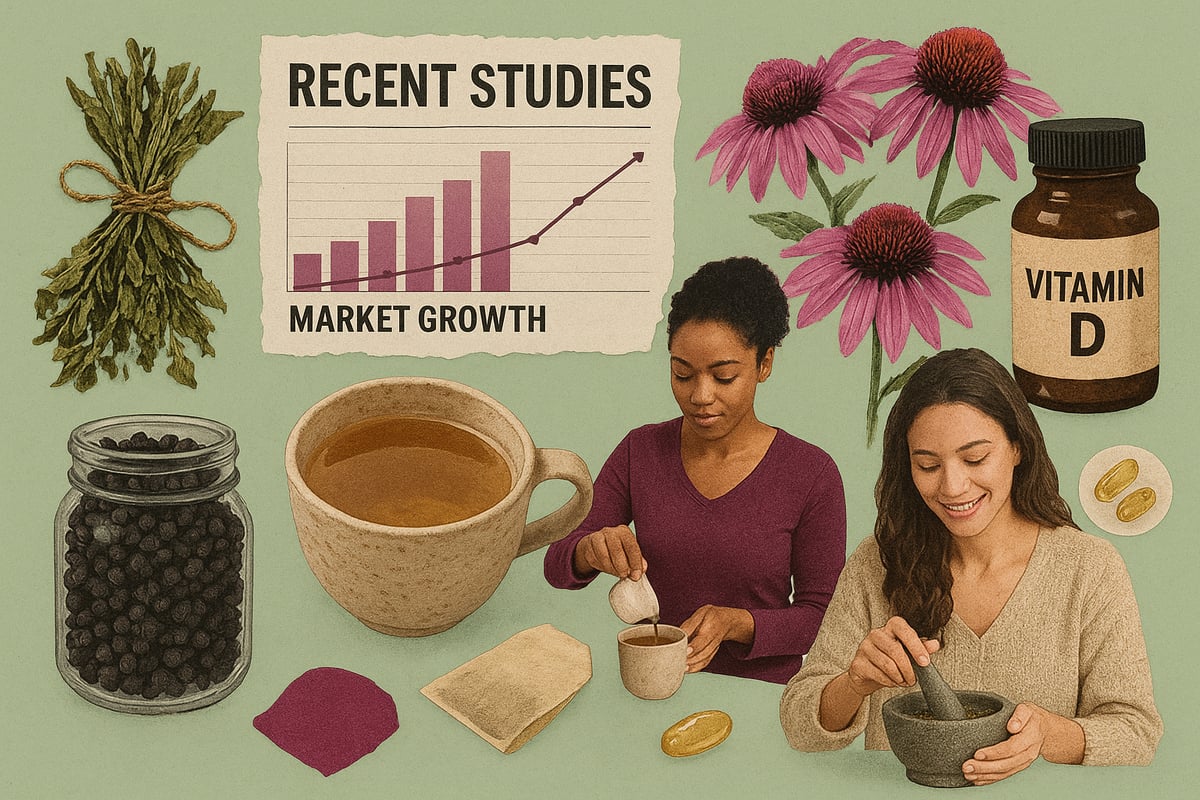
Een groeiende hoeveelheid wetenschappelijk onderzoek ondersteunt het gebruik van kruiden en natuurlijke middelen tegen griep. Studies naar vlierbessen en echinacea hebben bijvoorbeeld veelbelovende resultaten laten zien in het verminderen van zowel de duur als de ernst van griepsymptomen. Deze wetenschappelijke validatie helpt natuurlijke griepmedicatie van de marge naar de mainstream te verschuiven.
Consumenten voelen zich ook steeds meer aangetrokken tot plantaardige en duurzame gezondheidskeuzes. Mensen willen middelen die niet alleen effectief zijn, maar ook aansluiten bij hun waarden rond milieuverantwoordelijkheid en holistisch welzijn. Als gevolg hiervan zijn kruidensiroop, thee en supplementen nu huishoudelijke basisproducten in veel huizen.
Overheden en gezondheidszorgsystemen beginnen deze verschuiving te ondersteunen. Integratieve geneeskundige programma's, die conventionele en natuurlijke griepmedicatie combineren, worden steeds gebruikelijker in klinieken en ziekenhuizen. Zorgprofessionals bevelen op bewijs gebaseerde natuurlijke opties aan naast standaardbehandelingen, vooral voor preventie en milde gevallen.
Wereldwijde gebeurtenissen hebben ook een belangrijke rol gespeeld. De recente pandemie en aanhoudende problemen in de toeleveringsketen maakten conventionele medicijnen voor sommigen minder toegankelijk. Dit zette velen ertoe aan om over te stappen op natuurlijke griepmedicatie, vaak met behulp van ingrediënten die al in hun keuken of lokale winkels verkrijgbaar waren.
Zorgprofessionals beschouwen natuurlijke griepmedicatie nu als een waardevolle aanvulling op de standaardzorg, mits de middelen verstandig worden gekozen en naast medisch advies worden gebruikt.
Als u geïnteresseerd bent in het samenstellen van uw eigen natuurlijke grieppakket, vindt u Een plantaardig wellnesskabinet bouwen wellicht een nuttige bron.
In 2026 is het duidelijk dat natuurlijke griepmedicatie meer is dan een voorbijgaande trend. Het is een vertrouwde, wetenschappelijk onderbouwde benadering die mensen in staat stelt hun gezondheid op natuurlijke wijze te beschermen.
Hoe u veilige en effectieve natuurlijke griepmiddelen kiest
Het kiezen van de juiste natuurlijke griepmedicatie in 2026 gaat verder dan zomaar een populair product uit het schap pakken. Met zoveel beschikbare opties is het cruciaal om u te richten op middelen die zowel veilig als effectief zijn voor uw gezondheidsbehoeften.
Geef prioriteit aan op bewijs gebaseerde remedies
Niet alle natuurlijke griepmedicatie is gelijk. Zoek altijd naar middelen die worden ondersteund door gedegen wetenschappelijke studies, niet alleen door anekdotische beweringen. Door vakgenoten beoordeeld onderzoek, klinische proeven en meta-analyses moeten uw keuzes bepalen.
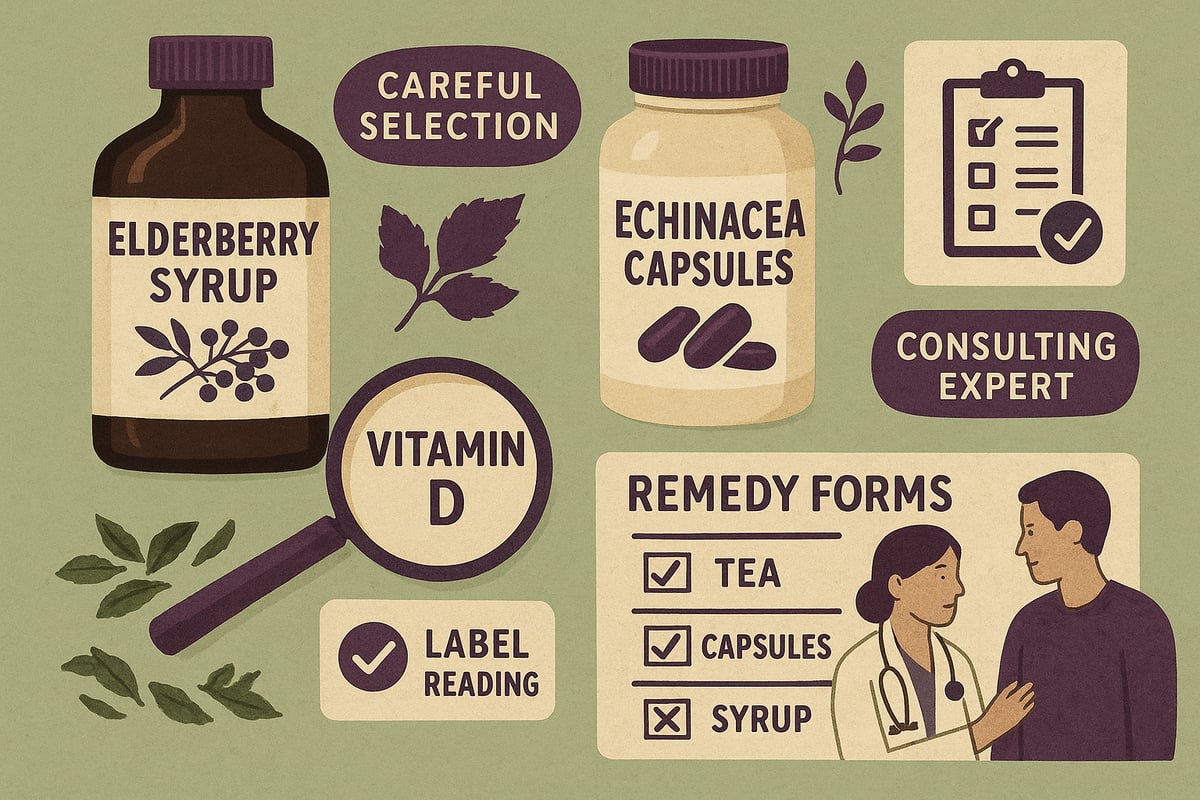
Controleer op bijgewerkte bevindingen van gerenommeerde bronnen. Vlierbessen en echinacea zijn bijvoorbeeld beide in gecontroleerde omgevingen bestudeerd op hun griepbestrijdende potentieel. Focus op producten die verwijzen naar specifiek onderzoek of certificeringen van vertrouwde organisaties tonen.
Kwaliteit, herkomst en vertrouwde merken
Kwaliteit is van groot belang bij natuurlijke griepmedicatie. Kies middelen die afkomstig zijn van gerenommeerde leveranciers en die worden vervaardigd volgens strenge normen. Zoek naar externe testen, die de zuiverheid garanderen en bevestigen dat producten vrij zijn van verontreinigingen of vervalsingen.
Controleer bij het lezen van etiketten de botanische naam, de extractstandaardisatie en het land van herkomst. Gerenommeerde merken bieden vaak transparantie over hun inkoop- en productieprocessen. Vermijd producten die geen duidelijke ingrediëntenlijsten of batchnummers hebben.
Dosering, bereiding en productvergelijking
De effectiviteit van een natuurlijke griepmedicatie hangt af van de juiste dosering, bereiding en hoe gemakkelijk uw lichaam het kan opnemen (biologische beschikbaarheid). Remedies zijn verkrijgbaar in verschillende vormen, zoals siropen, capsules, theeën en tincturen. Elk heeft zijn eigen voordelen en absorptiesnelheden.
Vlierbessen zijn bijvoorbeeld verkrijgbaar in siropen, zuigtabletten en capsules. Een gerandomiseerde klinische studie heeft aangetoond dat gestandaardiseerd vlierbessenextract de duur van griepsymptomen kan verkorten, maar alleen wanneer het in de juiste dosis en vorm wordt gebruikt. Vergelijk producten met behulp van de onderstaande tabel:
| Productvorm | Absorptiesnelheid | Consistentie dosering | Meest geschikt voor |
|---|---|---|---|
| Siroop | Snel | Gemakkelijk aan te passen | Kinderen, snel gebruik |
| Capsule | Matig | Vast, handig | Volwassenen, reizen |
| Zuigtablet | Matig | Vast, verzachtend | Keelpijn |
Volg altijd de doseringsinstructies en houd er rekening mee dat sommige middelen interactie kunnen hebben met voorgeschreven medicijnen of onderliggende gezondheidsproblemen.
Zoek professionele begeleiding en vermijd misinformatie
Het raadplegen van een zorgprofessional of gekwalificeerde kruidkundige voordat u met natuurlijke griepmedicatie begint, is verstandig, vooral als u reeds bestaande aandoeningen heeft of medicatie gebruikt. Professionals kunnen u helpen uw aanpak te personaliseren en potentiële bijwerkingen te voorkomen.
Wees voorzichtig met overdreven claims of middelen die onmiddellijke resultaten beloven. Houd u aan producten met duidelijke, op bewijs gebaseerde voordelen en vermijd producten die geen transparantie bieden. Door goed geïnformeerd en selectief te blijven, kunt u de meest effectieve natuurlijke griepmedicatie veilig in uw wellnessroutine integreren.
9 essentiële natuurlijke griepmiddelen voor 2026
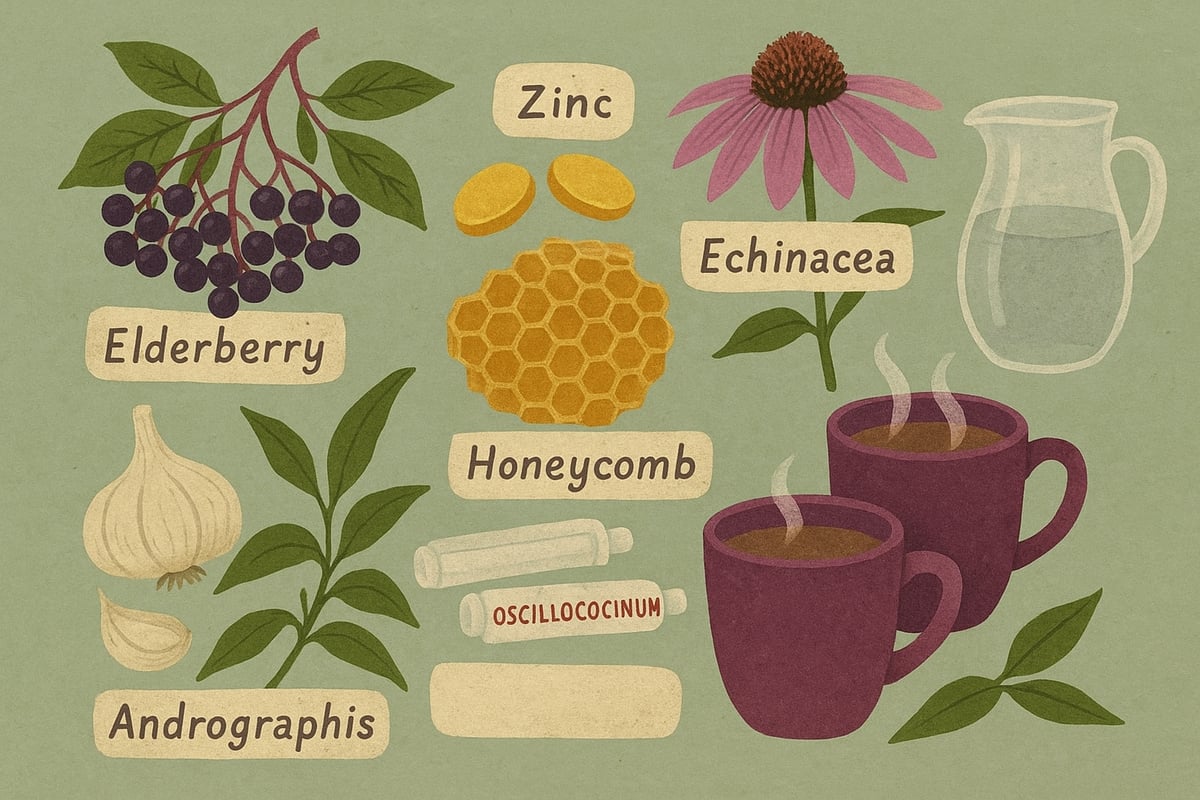
Op zoek naar effectieve natuurlijke griepmedicatie in 2026? U bent niet de enige. Nu steeds meer mensen bewezen, holistische manieren zoeken om gezond te blijven, is het cruciaal om te begrijpen welke middelen daadwerkelijk werken. Hier zijn negen wetenschappelijk onderbouwde oplossingen om uw immuunsysteem te ondersteunen, symptomen te verlichten en u te helpen sneller te herstellen.
1. Vlierbessenextract
Vlierbessenextract blijft een topkeuze voor natuurlijke griepmedicatie in 2026. Rijk aan flavonoïden, is aangetoond dat vlierbessen de virale toegang blokkeren en de activiteit van immuuncellen stimuleren. Recente klinische onderzoeken bevestigen dat vlierbessen de duur en ernst van griep significant verminderen in vergelijking met placebo.
Tegenwoordig is vlierbessen verkrijgbaar in handige vormen zoals siropen, capsules en zuigtabletten. Siropen blijven populair voor gezinnen, terwijl capsules geschikt zijn voor wie een precieze dosering zoekt. Zuigtabletten bieden verlichting bij keelpijn en kunnen onderweg worden ingenomen.
De meeste volwassenen nemen dagelijks 300-600 mg vlierbessenextract tijdens het griepseizoen. Veiligheidsstudies tonen weinig bijwerkingen, maar het is het beste om onrijpe of rauwe bessen, die giftig kunnen zijn, te vermijden. Kies altijd producten met tests van derden om de zuiverheid te garanderen.
Veel gebruikers nemen nu vlierbessen op in hun dagelijkse wellnessroutine, voegen siroop toe aan smoothies of nemen capsules bij het ontbijt. Real-world gegevens uit 2026 tonen een toename van 40% in vlierbessengebruik onder volwassenen die natuurlijke griepmedicatie zoeken, met hoge tevredenheidscijfers voor symptoomverlichting.
2. Echinacea Purpurea
Echinacea purpurea is een vaste waarde in de natuurlijke griepgeneeskunde, bekend om zijn immuunmodulerende en ontstekingsremmende effecten. Het werkt door de activiteit van witte bloedcellen te verbeteren en ontstekingen in de luchtwegen te verminderen.
Recente studies in 2026 benadrukken dat echinacea de duur van de griep tot twee dagen kan verkorten en de ernst van de symptomen kan verminderen. Tincturen, theeën en capsules blijven de populairste vormen, waarbij warme dranken vooral gewaardeerd worden in de winter. Een klinisch onderzoek wees zelfs uit dat op echinacea gebaseerde warme dranken even effectief waren als oseltamivir (Tamiflu) voor de behandeling van influenza (Echinacea even effectief als Tamiflu).
Voor de meeste volwassenen wordt echinacea genomen bij de eerste tekenen van symptomen, gedurende één tot twee weken. Het is over het algemeen veilig, hoewel mensen met een allergie voor de margrietfamilie voorzichtig moeten zijn. Mensen met auto-immuunziekten wordt geadviseerd een zorgverlener te raadplegen voordat ze het gebruiken.
Consumenten melden het grootste voordeel wanneer echinacea vroeg in de ziekte wordt gebruikt. Velen geven er de voorkeur aan als onderdeel van een breder natuurlijk griepmedicijnplan, waarbij het wordt gecombineerd met vitamine C en vlierbessen voor verbeterde resultaten.
3. Vitamine D-suppletie
Vitamine D is essentieel voor de immuunafweer, waardoor het een hoeksteen is van natuurlijke griepmedicatie. Het ondersteunt de productie van antimicrobiële peptiden en versterkt de ademhalingsbarrière tegen virussen.
Onderzoek koppelt lage vitamine D-waarden aan een verhoogd grieprisico en ernstigere symptomen. Suppletie wordt nu breed aanbevolen, vooral voor mensen met beperkte blootstelling aan de zon, zoals ouderen en binnenwerkers. Vitamine D kan worden verkregen uit supplementen, verrijkte voedingsmiddelen of veilige blootstelling aan zonlicht.
De meeste richtlijnen adviseren 1000-2000 IE per dag voor volwassenen, met hogere doses voor mensen met een tekort. Het is belangrijk om niet meer dan 4000 IE per dag te overschrijden zonder medisch toezicht, aangezien te veel toxiciteit kan veroorzaken.
Veel mensen integreren vitamine D in hun dagelijkse routine en nemen het bij het ontbijt. Als natuurlijke griepmedicatie wordt het gewaardeerd voor zowel preventie als ondersteuning van het herstel, vooral tijdens de donkere maanden.
4. Zinkzuigtabletten
Zinkzuigtabletten blijven een vertrouwde natuurlijke griepmedicatie voor het tegengaan van virale replicatie en het stimuleren van de immuunrespons. Zink verstoort het vermogen van griepvirussen om zich te vermenigvuldigen, waardoor zowel de duur als de ernst van de symptomen worden verminderd.
Klinische gegevens bevestigen dat zinkzuigtabletten, wanneer ze binnen 24 uur na het begin van de symptomen worden ingenomen, de duur van de griep met ongeveer 33% kunnen verkorten. Zuigtabletten hebben de voorkeur vanwege hun directe werking in de keel, maar tabletten en sprays zijn ook verkrijgbaar.
Voor volwassenen is 15-30 mg per dag de typische dosering, verdeeld over meerdere zuigtabletten. Het is belangrijk om niet meer dan 40 mg per dag te overschrijden, aangezien te veel zink misselijkheid kan veroorzaken of de koperabsorptie kan verstoren.
Mensen waarderen het gemak van zinkzuigtabletten en houden ze bij de hand op het werk of op school. Veel gebruikers nemen zink op als onderdeel van hun reguliere natuurlijke griepmedicatiepakket, vooral tijdens het reizen of tijdens het griepseizoen.
5. Propolisextract
Propolisextract, een harsachtige stof gemaakt door bijen, wint aan populariteit als natuurlijke griepmedicatie. Het bevat krachtige antimicrobiële en antivirale verbindingen die helpen de luchtwegen te verdedigen.
Onderzoek ondersteunt propolis voor het verminderen van de ernst en duur van luchtweginfecties, waaronder griep. Verkrijgbaar als tincturen, sprays en capsules, wordt propolis bijzonder gewaardeerd voor het verzachten van keelpijn en het verlichten van bovenste luchtwegsymptomen.
Volwassenen gebruiken meestal een paar sprays of 500 mg capsules per dag tijdens ziekte. Mensen die allergisch zijn voor bijen of pollen moeten propolis vermijden. Zoek altijd naar producten zonder toegevoegde suikers en kunstmatige vulstoffen.
Veel griepslachtoffers gebruiken propolis naast andere middelen, zoals honing en kruidenthee. De unieke voordelen maken het een favoriet in de natuurlijke grieppreparaten, vooral voor mensen die op zoek zijn naar zachte maar effectieve ondersteuning.
6. Knoflooksupplementen
Knoflook heeft een langdurige reputatie in de natuurlijke griepgeneeskunde, dankzij de actieve stof allicine, die antivirale en immuunversterkende eigenschappen heeft. Knoflook ondersteunt het vermogen van het lichaam om griepvirussen te bestrijden en kan de ernst van de symptomen helpen verminderen.
Recente studies tonen aan dat knoflooksupplementen het voorkomen van griep kunnen verminderen en het herstel kunnen versnellen. Supplementen bieden een betrouwbare manier om een consistente dosis te krijgen, hoewel sommige mensen de voorkeur geven aan rauwe of gekookte knoflook voor culinaire en gezondheidsvoordelen.
Bij gevoelige personen kan milde spijsverteringsklachten optreden, maar de meeste verdragen knoflook goed. Degenen die bloedverdunners gebruiken, moeten een arts raadplegen voordat ze met knoflooksupplementen beginnen.
Casestudy's tonen aan dat mensen die knoflook gebruiken als onderdeel van hun natuurlijke griepaanpak, vaak minder ziektedagen en mildere symptomen melden. Knoflook toevoegen aan maaltijden is een eenvoudige manier om de immuniteit het hele jaar door te versterken.
7. Andrographis Paniculata
Andrographis paniculata is een traditioneel kruidengeneesmiddel uit Azië dat nu wereldwijd erkend wordt in de natuurlijke griepgeneeskunde. Het staat bekend om zijn ontstekingsremmende, antivirale en immuunversterkende effecten.
Onderzoek benadrukt dat Andrographis de ernst van de symptomen kan verminderen en het herstel van griep kan versnellen, vooral wanneer het bij het eerste teken van ziekte wordt ingenomen. Het is verkrijgbaar als tabletten, theeën en vloeibare extracten, waarbij tabletten het populairst zijn voor een consistente dosering.
Volwassenen nemen doorgaans 400–1200 mg per dag gedurende maximaal 10 dagen. Het wordt over het algemeen goed verdragen, maar mensen met spijsverteringsgevoeligheden moeten beginnen met een lagere dosis. Zwangere vrouwen of vrouwen die borstvoeding geven, wordt geadviseerd Andrographis te vermijden.
Mensen waarderen Andrographis vanwege de snelle werking en minimale bijwerkingen. Het wordt vaak gekozen als een kernonderdeel van een natuurlijke griepmedicatie, vooral onder mensen die op zoek zijn naar op bewijs gebaseerde kruidenoplossingen.
8. Oscillococcinum
Oscillococcinum is een homeopathisch middel dat veel gebruikt wordt in Europa en elders steeds meer belangstelling krijgt als natuurlijk griepmiddel. De status ervan blijft controversieel, met gemengd bewijs voor de werkzaamheid.
Sommige gebruikers melden dat Oscillococcinum helpt om griepsymptomen te verminderen wanneer het in het vroegste stadium wordt ingenomen, terwijl anderen weinig verschil zien. Studies blijven de effectiviteit ervan bespreken, hoewel het populair blijft vanwege de zachte aanpak en het gebrek aan ernstige bijwerkingen.
Het middel wordt meestal ingenomen als kleine flesjes zoetsmakende korrels, die bij het begin van de symptomen elke 6 uur onder de tong worden opgelost. Het wordt als veilig beschouwd voor alle leeftijden, met weinig gemelde bijwerkingen.
Oscillococcinum wordt vaak gebruikt als aanvullende optie naast andere natuurlijke griepmedicatie, vooral voor mensen die de voorkeur geven aan homeopathische benaderingen of gevoelig zijn voor kruidenproducten.
9. Hydratatie en kruidenthee
Goede hydratatie en kruidenthee zijn fundamentele pijlers van de natuurlijke griepgeneeskunde. Gehydrateerd blijven ondersteunt de immuunfunctie en helpt slijm te verdunnen, waardoor het herstel van griepsymptomen wordt vergemakkelijkt.
Kruidenthee zoals gember, pepermunt, kamille en zoethoutwortel bieden extra voordelen. Gemberthee helpt misselijkheid en ontsteking te verminderen, terwijl pepermunt hoofdpijn en verstopping verzacht. Kamille bevordert ontspanning en slaap, en zoethoutwortel kan keelpijn verlichten.
Probeer uw eigen kruidenmengsels te zetten of ontdek samengestelde opties zoals die in de Kruidenthee voor Welzijn collectie voor gerichte ondersteuning. Voor een eenvoudig recept, laat verse gember en citroen trekken in heet water met een lepel honing.
Veel mensen nemen nu kruidenthee op in hun dagelijkse natuurlijke grieppreparaten, de hele dag door nippend voor comfort en genezing. Het combineren van hydratatie met gerichte thee kan een significant verschil maken in symptoomverlichting en herstel.
Natuurlijke griepmiddelen integreren in uw wellnessroutine
Het integreren van natuurlijke griepmedicatie in uw dagelijks leven kan zowel empowerend als praktisch zijn, vooral nu steeds meer mensen holistische strategieën voor immuunondersteuning zoeken. De sleutel is om een evenwichtige aanpak te creëren die past bij uw levensstijl en tegelijkertijd veiligheid en effectiviteit maximaliseert. Met een beetje planning kunt u natuurlijke griepmedicatie een integraal onderdeel maken van uw wellnessreis.
Begin met een holistisch plan
Begin met het beoordelen van uw persoonlijke en gezinsbehoeften. Identificeer welke natuurlijke griepmedicatieopties aansluiten bij uw gezondheidsdoelen, levensstijl en eventuele reeds bestaande aandoeningen. Houd rekening met seizoensgebondenheid, aangezien sommige middelen het beste werken als preventieve middelen, terwijl andere ideaal zijn voor symptoomverlichting. Het bijhouden van een wellnessdagboek kan u helpen bij te houden wat werkt en wanneer.
Combineer middelen veilig voor maximaal voordeel
Synergie is belangrijk bij het gebruik van meer dan één natuurlijk griepmiddel. Sommige middelen, zoals vlierbes en vitamine D, kunnen samen worden gebruikt om het immuunsysteem te ondersteunen, terwijl andere kunnen interageren of overlappen. Controleer altijd op mogelijke interacties, vooral als u voorgeschreven medicatie gebruikt. Het raadplegen van een zorgprofessional of kruidkundige zorgt ervoor dat uw aanpak op maat en veilig is. Onthoud dat meer niet altijd beter is – houd u aan de aanbevolen doses en vermijd het verdubbelen van vergelijkbare ingrediënten.
Creëer dagelijkse rituelen en bewuste routines
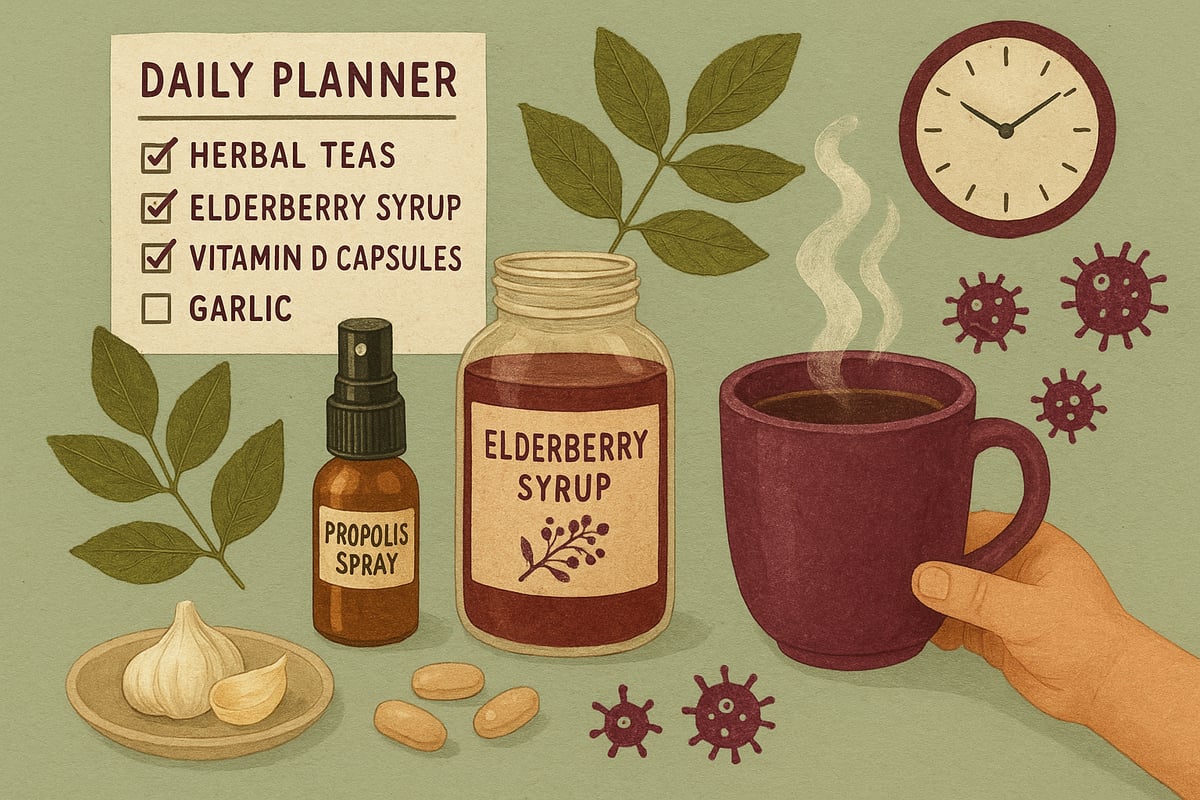
Consistentie is essentieel. Integreer natuurlijke griepmedicatie in uw dagelijkse gewoonten, zoals het toevoegen van echinaceathee aan uw ochtend of het nemen van een zinkzuigtablet bij de eerste tekenen van symptomen. Gebruik een wekelijkse planner of stel herinneringen in om op koers te blijven. Rituelen zoals het zetten van kruidenthee of het bereiden van met knoflook geïnfuseerde maaltijden kunnen zinvolle wellnesspraktijken worden, die u verbinden met het ritme van elk seizoen. Voor meer ideeën over seizoensgebonden plantaardige routines, zie De kunst van het seizoensgebonden leven.
Controleer uw gezondheid en weet wanneer u hulp moet zoeken
Let goed op hoe uw lichaam reageert op elk natuurlijk griepmiddel. Als de symptomen verergeren of u iets ongewoons opmerkt, aarzel dan niet om een professional te raadplegen. Het is vooral belangrijk om kinderen, oudere familieleden en mensen met chronische ziekten in de gaten te houden. Houd noodcontacten bij de hand en wees voorbereid om over te schakelen op conventionele zorg indien nodig.
Voorbeeld dagelijkse integratietabel
| Tijdstip van de dag | Middel | Doel |
|---|---|---|
| Ochtend | Vitamine D-capsule | Ondersteuning van het immuunsysteem |
| 's Middags | Vlierbessenpastille | Antiviraal, verlichting van symptomen |
| 's Middags | Echinacea-thee | Immuunmodulatie |
| 's Avonds | Knoflooksupplement | Algemene immuunversterking |
| Indien nodig | Propolis-spray | Keelpijn, luchtwegen |
In 2026 lieten de door gebruikers gerapporteerde resultaten een hoge tevredenheid zien met deze geïntegreerde aanpak. Gezinnen benadrukken een verkorte symptoomduur en een gevoel van empowerment bij het gebruik van natuurlijke griepmedicatie als onderdeel van het dagelijks leven. Onthoud dat elke routine moet worden aangepast aan individuele behoeften en moet worden bijgewerkt naarmate uw gezondheid verandert.
Voorzorgsmaatregelen en wanneer medische hulp inroepen
Hoewel natuurlijke griepmedicatie een ondersteunende rol kan spelen bij milde griepklachten, is het cruciaal om de beperkingen ervan te erkennen. Niet elk griepgeval kan of mag thuis worden behandeld — soms is dringende medische hulp essentieel.
Let op deze waarschuwingssignalen:
- Hoge of aanhoudende koorts
- Kortademigheid of pijn op de borst
- Ernstige uitdroging of verwardheid
- Symptomen die verergeren na een aanvankelijke verbetering
Als u of een dierbare een van deze klachten ervaart, raadpleeg dan onmiddellijk een zorgverlener. Volgens de CDC-studie over vroegtijdige antivirale griepbehandeling, kan vroege interventie met conventionele medicatie het risico op ernstige complicaties aanzienlijk verminderen.
Zelfmedicatie met natuurlijke griepmedicatie is niet altijd veilig, vooral niet als u onderliggende gezondheidsproblemen heeft of voorgeschreven medicatie gebruikt. Kies altijd voor hoogwaardige, gerenommeerde producten om besmetting of vervalsing te voorkomen.
Voor de beste resultaten combineert u natuurlijke griepmedicatie met professionele begeleiding. Luister naar uw lichaam, gebruik vertrouwde middelen en aarzel niet om hulp te zoeken als de symptomen escaleren.
Als u de wijsheid van deze negen natuurlijke griepmiddelen in uw dagelijkse routine wilt opnemen, gaat het erom eenvoudige manieren te vinden om plantaardige ondersteuning tot een gewoonte te maken.
Bij Natura Sacra geloven we dat welzijn van binnenuit begint, en de juiste kruidenmengsels kunnen een echt verschil maken wanneer u extra immuunondersteuning nodig heeft. Als u nieuwsgierig bent om meer zachte, op onderzoek gebaseerde plantenrituelen voor elk seizoen te ontdekken, zult u dol zijn op onze collectie kruidentheeën, gemaakt voor dagelijkse balans, comfort en veerkracht.
Ontdek onze kruidentheeën, in kleine batches gemaakt ter ondersteuning van de spijsvertering, slaap, detox, emotionele balans en dagelijks welzijn.