When you search for “what herbs are good for ADHD and focus”, you’ll find long lists of plants that promise better concentration, calmer nerves, and sharper memory. Some of these herbs do have early clinical data behind them. Others are traditional allies with good evidence for general cognitive or emotional support, but not specifically for ADHD.
Read more...
What Herbs Are Good for ADHD and Focus? An Evidence-Informed Guide

What Herbs Are Good for ADHD and Focus? An Evidence-Informed Guide
Quick note before we start: ADHD is a complex neurodevelopmental condition. Stimulant and non-stimulant medications, behavioural therapy, and environmental support remain the main evidence-based treatments. Herbs can offer additional support for focus, calm, and cognitive health – though there's no supporting evidence that they are a cure. Always speak to your or your child's health practitioner before adding herbs, especially if you’re on medication, pregnant, or breastfeeding.
When you search for “what herbs are good for ADHD and focus”, you’ll find long lists of plants that promise better concentration, calmer nerves, and sharper memory. Some of these herbs do have early clinical data behind them. Others are traditional allies with good evidence for general cognitive or emotional support, but not specifically for ADHD.
This guide brings those threads together. We’ll look at:
- Tier 1: Herbs and extracts that have been studied in children or adults with ADHD
- Tier 2: Herbs that support focus, memory, and emotional regulation more broadly
- How to think about herbs as part of a whole-person ADHD plan
- A gentle example ritual for focus that you can adapt to your own reality
We’ll also keep the language grounded: what research actually shows, where evidence is thin, and how to use this information to have a more informed conversation with your healthcare provider.
ADHD, Focus and Herbs: What They Can (and Can’t) Do
Systematic reviews of herbal medicine in ADHD show a clear pattern: only a small group of herbs has been studied in proper clinical trials, and even there, sample sizes are modest and follow-up is short. Results are often “promising but not conclusive”.

That means that specific to ADHD treatment, herbs are best understood as:
- Adjunctive tools – something that may sit alongside treatment, coaching, nutrition, and sleep hygiene
- Symptom-focused supports – for example: calmer sleep, reduced anxiety, or more mental stamina
- Not a replacement for a full ADHD assessment, diagnosis, or evidence-based treatment
With that in mind, let’s look at the plants that have the most data for ADHD and focus.
Tier 1 – Herbs With Direct ADHD Research
These herbs have been studied in children or adolescents diagnosed with ADHD, usually in small randomised trials or open-label studies. The research is still developing, but this is where we see the strongest ADHD-specific signal.
Bacopa monnieri (Brahmi)
Traditional role: A classic Ayurvedic herb used for memory, learning, and mental clarity.
What the research suggests: Several small studies in children with ADHD have found that standardised extracts of Bacopa can reduce restlessness and improve attention and self-control over a period of months. In one 6-month study, children who took 225 mg of Bacopa extract daily showed meaningful reductions in ADHD symptoms and the extract was well tolerated.
How it may work: Bacopa appears to modulate neurotransmitters (like dopamine and serotonin), act as an antioxidant in the brain, and support synaptic communication – all relevant to focus and cognitive performance.
Key cautions: Bacopa can cause digestive upset in some people. It should be used with caution in pregnancy and always under professional guidance in children.
Saffron (Crocus sativus)

Traditional role: A culinary spice long used in Persian and Mediterranean medicine for mood and cognition.
What the research suggests: Several small randomised trials in children and adolescents indicate that saffron extract may reduce ADHD symptom scores – both as an add-on to methylphenidate and, in some studies, with similar efficacy to methylphenidate on core symptoms over the short term.
How it may work: Saffron’s key constituents (crocin, safranal) seem to influence dopamine and serotonin signalling, provide antioxidant support, and modulate inflammation, which may indirectly support attention and mood regulation.
Key cautions: High doses of saffron are not recommended in pregnancy. As with all concentrated extracts, quality and dosage matter – this is not about adding huge amounts of saffron to food.
Panax ginseng (often combined with Ginkgo biloba)
Traditional role: A classic tonic in East Asian medicine used for stamina, resilience, and cognitive function.
What the research suggests: Trials using Panax ginseng – sometimes combined with Ginkgo biloba – show moderate improvements in attention, impulsivity, and overall cognitive performance in individuals with ADHD, although study numbers are still small.
How it may work: Ginsenosides (active compounds in ginseng) appear to support dopamine and noradrenaline pathways, improve cerebral blood flow, and act as mild stimulants – potentially useful for mental energy and task engagement.
Key cautions: Ginseng can be stimulating and may not be suitable for people with high blood pressure, insomnia, or certain psychiatric conditions. It may interact with blood thinners and other medications.
Pycnogenol® (French maritime pine bark extract)
Traditional role: Not a “traditional herb” in the same sense, but a standardised extract rich in proanthocyanidins (antioxidant compounds).
What the research suggests: Some randomised trials in children with ADHD found that Pycnogenol improved attention and reduced hyperactivity and oxidative stress markers, though results are mixed and follow-up periods are short.
How it may work: By supporting blood flow, reducing oxidative stress, and modulating catecholamine pathways, which are involved in focus and impulse control.
Key cautions: Generally well tolerated in short-term studies, but long-term data are limited. Discuss use with your health practitioner, particularly if you’re taking other medications that affect clotting.
Valerian and Lemon Balm Combinations

Traditional role: Both herbs are classic “nervines” used for nervous tension, mild anxiety, and sleep. Lemon balm is also used traditionally to support focus and mood.
What the research suggests: In a large European study on children with restlessness, hyperactivity, and sleep issues – many with ADHD symptoms – a combination of valerian and lemon balm improved sleep quality and reduced anxiety and hyperactivity.
How it may work: Both herbs act on the GABAergic system – one of the brain’s primary calming pathways – helping to soften “over-revved” nervous systems and support more settled behaviour and sleep.
Key cautions: Valerian can cause paradoxical stimulation in a minority of people. Lemon balm is generally gentle, but people with thyroid issues should discuss use with their clinician.
Where Ginkgo and St John’s Wort Fit In
You’ll often see Ginkgo biloba and St John’s wort in ADHD herb lists. The nuance:
- Ginkgo has been studied extensively for general cognitive support and circulation, but a systematic review suggests that ginkgo alone is not clearly effective as an ADHD treatment.
- St John’s wort is well known for mild to moderate depression, but current evidence does not support it as an ADHD treatment, and it has many drug interactions (including with SSRIs, birth control pills, and some ADHD medications).
Both may still have a place in addressing co-occurring issues (for example, mood), but they are not front-line ADHD herbs and should always be used under professional supervision.
Tier 2 – Herbs That Support Focus, Memory and Emotional Regulation
Beyond ADHD-specific trials, several herbs have a growing evidence base for cognitive performance, mental stamina, and emotional balance. They may not be studied directly in ADHD, but they can support the brain and nervous system that sit underneath the diagnosis.
Rosemary (Rosmarinus officinalis)

Why it’s interesting: Both rosemary extract and aroma have been shown in human studies to support aspects of memory and cognitive performance in healthy adults, and may reduce mental fatigue.
How it helps in real life: For people with ADHD, this doesn’t “treat” the condition – but it may contribute to clearer recall, sustained focus during tasks, and a sense of mental brightness.
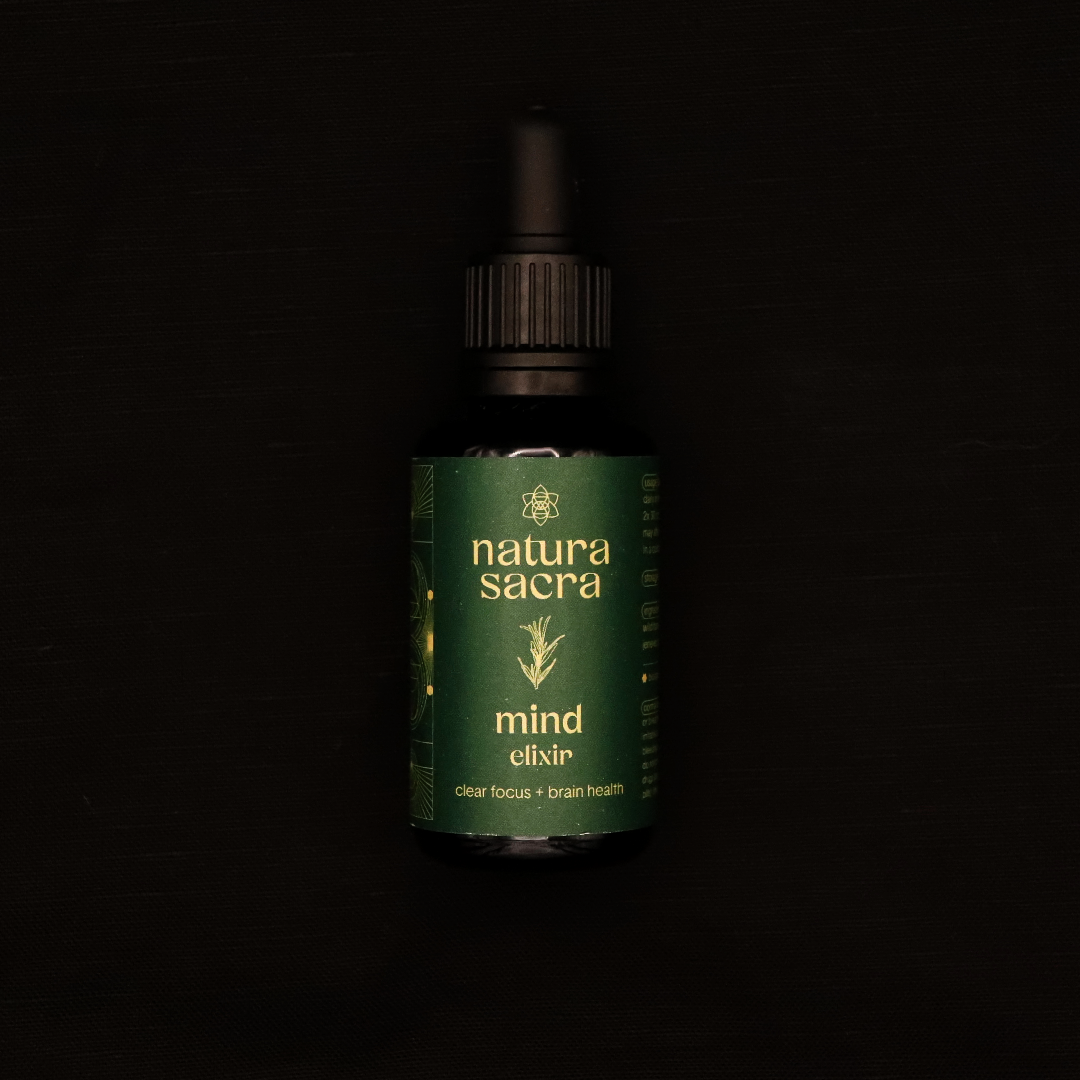
You’ll find rosemary as a key plant in our Mind Elixir – clear focus + brain health, where it’s combined with ginkgo and peppermint for daytime cognitive support.
Peppermint (Mentha × piperita)
Why it’s interesting: Studies suggest that peppermint aroma and peppermint tea can enhance alertness and aspects of memory and attention in healthy adults.
How it helps in real life: Again, not an ADHD treatment in itself – but as part of a focus ritual (tea, tincture, or aroma), peppermint can help the brain “switch into” task mode and feel more awake without caffeine.
Rhodiola, Gotu Kola, Lion’s Mane and Other Nootropic Allies
Rhodiola rosea is an adaptogen traditionally used for stress resilience and mental stamina. Small studies suggest it may improve fatigue, attention, and cognitive performance under stress.
Gotu kola (Centella asiatica) is another herb used for mental clarity and calm focus; research supports benefits for memory and cognitive function, often with a mildly relaxing (rather than stimulating) effect.
Lion’s mane (Hericium erinaceus) is a medicinal mushroom with emerging evidence for supporting nerve growth factor (NGF) and cognitive health. It’s frequently used in nootropic stacks for brain fog and mental endurance.
These herbs may be particularly helpful where ADHD is accompanied by chronic stress, burnout, or long days of mentally demanding work.
Calming Nervines: Lemon Balm, Oat Straw, Passionflower & Friends
For many people with ADHD, the challenge is not only focus – it’s the restless, anxious, or wired state that sits underneath the difficulty concentrating.
- Lemon balm (Melissa officinalis) – traditionally used to calm the nervous system and gently improve focus. Human trials suggest benefits for anxiety, mood, and aspects of cognitive performance.
- Oat straw / milky oats (Avena sativa) – a nutritive tonic for a frazzled nervous system, used long-term to “feed” a depleted brain and support steadier focus.
- Passionflower (Passiflora incarnata) – supports GABAergic calming, often used for racing thoughts and sleep-onset issues.
- Chamomile and linden – long-used allies for emotional tension, “edgy” irritability, and bedtime wind-down.
These herbs are less about direct cognitive enhancement and more about creating a nervous system state where focus is actually possible.
How to Choose Herbs for ADHD and Focus (Without Getting Overwhelmed)
Because the evidence is still emerging, the most sensible approach is to think in layers rather than searching for a single “magic herb”. Consider:
- Core ADHD treatment first: Assessment, appropriate treatment (if used), behavioural and educational support, right diet, sleep hygiene, movement.
-
Then, targeted herbal support:
- If inattention and brain fog dominate – consider nootropic herbs like bacopa, rosemary, ginseng, or a synergy blend such as our Mind Elixir, always alongside medical guidance.
- If anxiety, restlessness, or insomnia dominate – calming nervines like lemon balm, passionflower, and valerian/lemon balm combinations may be more appropriate; see also our Stress & Sleep Collection.
- Nutrition as a highly important factor: Omega-3s, iron, zinc, magnesium, and a whole-food diet appear to influence ADHD symptom patterns and brain health in general.
And always – especially for children – work with a clinician who understands both ADHD and integrative medicine.

A Gentle Herbal Ritual for Study or Deep Work
This is not a treatment protocol – just a practical way to bring herbs into a focus-supportive routine. Adjust to what feels right for you, and always check for personal contraindications.
1. Pre-focus check-in (2–3 minutes)
Sit down at your workspace and do a quick body scan: feet on the floor, shoulders relaxed, jaw unclenched. Name one concrete task you’ll start with (for example, “outline the first page of my report”).
2. Herbal cue for focus (5–10 minutes)
- Prepare a cup of peppermint or rosemary-forward tea, or
- Take a measured dose of a focus blend such as Mind Elixir in water, following the label guidance.
As you sip, review your single starting task. The idea is to pair the sensory cue (taste and aroma) with your brain’s “now we’re focusing” mode over time.
3. Time-boxed focus (15–30 minutes)
Use a timer (15–30 minutes) where your only job is to stay in the same task. It’s okay if your mind wanders – the win is bringing it gently back each time. Herbs can support the underlying physiology, but focus is still a skill you practice.
4. Micro break + re-set
Between rounds, stand up, stretch, drink water, or look out a window. If nervous energy is high, a calming tea (for example, lemon balm with chamomile) can be helpful here, especially later in the day.
Safety, Children and ADHD Medication – Your Key Questions Answered
Can herbs replace ADHD medication?
Based on current research and evidence, the honest answer is no. Some herbs may meaningfully support attention, hyperactivity, sleep, or anxiety, but they have not been shown to be a full replacement for stimulant or non-stimulant medications in well-designed long-term trials.
Many families and adults use herbs as adjunctive support – for example, to ease side-effects, support sleep, or provide a layer of cognitive and emotional resilience.
Are herbs for ADHD safe for children?
Some herbs in this guide have been studied specifically in children (for example, bacopa, saffron, valerian/lemon balm combinations, Pycnogenol). But “studied” is not the same as “always safe for everyone”. Always speak first with your child's health practitioner.
Important points:
- Children metabolise herbs differently – dosing must be adjusted by weight and age.
- Some herbs (like St John’s wort) have major drug interactions.
- Long-term safety data are limited for many plant extracts in paediatric populations.
This is why the safest path is to work with a paediatrician, psychiatrist, or qualified herbalist rather than self-experimenting with your child.
How long do herbs for focus and ADHD take to work?
It depends on the herb and the goal:
- Nervines like lemon balm or passionflower may have acute calming effects – often within 30–90 minutes.
- Nootropics like bacopa or rosemary extracts typically require weeks or months of consistent use in studies before full benefits appear.
Think of herbs for ADHD and focus as part of a longer-term nervous system and brain health strategy, not as a “take once and everything changes” solution.
Where Natura Sacra Fits In
At Natura Sacra, some of our products use herbs that support mental and emotional wellbeing, as well as nervines for calm and better sleep. They're crafted to support the foundations that people with ADHD often lean on: clearer focus, calmer evenings, and steadier mood.
- Mind Elixir – a daytime blend with rosemary, ginkgo, and peppermint designed to support clear focus and brain circulation.
- Mental & Emotional Wellbeing Collection – curated remedies for mental clarity, emotional steadiness, and daily resilience.
- Stress & Sleep Collection – for those whose focus issues are closely tied to poor sleep or evening overstimulation.
Whichever herbs you explore, keep bringing the conversation back to your lived reality: What actually helps you get through your day? What supports your child’s functioning at home and school? Herbs are at their best when they’re woven into that honest, evolving picture – not treated as a secret cure.
Disclaimer: This article is for educational purposes only and does not provide medical advice, diagnosis, or treatment. Always consult your healthcare provider before changing your treatment plan or adding new supplements, especially in children or if you are pregnant, breastfeeding, or on medication.