Menstruatiekrampen die uitstralen naar de onderrug kunnen uitputtend zijn. Voor veel mensen is menstruatiepijn niet zomaar een trekkende pijn in de onderbuik, maar een diepe pijn die zich verspreidt via de heupen, wervelkolom en gemoedstoestand. Deze gids onderzoekt waarom krampen ontstaan, waarom ze vaak de onderrug beïnvloeden en hoe warmte, kruiden en eenvoudige rituelen natuurlijke verlichting kunnen bieden.
Verwarmende kruiden voor krampen, humeur en spanning in de onderrug

Het menstruatiecomfortritueel: Verwarmende kruiden voor krampen, stemming en lage rugpijn
Menstruatiekrampen die uitstralen naar de onderrug kunnen uitputtend zijn. Voor veel mensen is menstruatiepijn niet alleen een trekkerig gevoel in de onderbuik, maar een diepe pijn die zich verspreidt door de heupen, de ruggengraat en de stemming beïnvloedt. Deze gids onderzoekt waarom krampen optreden, waarom ze vaak de onderrug beïnvloeden, en hoe warmte, kruiden en eenvoudige rituelen natuurlijke verlichting kunnen bieden.
Gebruikmakend van traditionele kruidengeneeskunde en modern onderzoek, kijken we naar verwarmende kruiden voor menstruatiekrampen, baarmoederondersteunende planten en zenuwstelselkruiden die spanning en prikkelbaarheid kunnen verlichten. Je vindt ook een gestructureerd menstruatiecomfortritueel dat warmtetherapie, een verwarmende kruidenthee, zachte buik- en lage rugmassage, ademhalingsoefeningen en lichte beweging combineert.

Omdat je levensstijl en dieet ook ontstekingen en pijn beïnvloeden, bieden we een praktisch overzicht van voedingsmiddelen die kunnen helpen bij menstruatiekrampen en die voor sommigen een opgeblazen gevoel en pijn kunnen verergeren. Gedurende het artikel vind je suggesties voor het werken met kruiden en rituelen op een manier die realistisch is op dagen met weinig energie, en respectvol voor medische zorg wanneer dat nodig is.
Als je op zoek bent naar natuurlijke middelen tegen menstruatiepijn en lage rugpijn die verder gaan dan snelle oplossingen, dan biedt deze educatieve gids een gegrond startpunt om je lichaam beter te begrijpen en een menstruatieritueel op te bouwen dat echt bij je leven past.
Waarom menstruatiekrampen uitstralen naar de onderrug
Menstruatiekrampen beginnen in de baarmoeder. Tijdens je menstruatie maakt het lichaam hormoonachtige stoffen aan, prostaglandinen genaamd, die de baarmoederspier samentrekken zodat deze haar bekleding kan afstoten. Wanneer de prostaglandinespiegels hoog zijn, worden de samentrekkingen sterker, kunnen bloedvaten vernauwen en nemen pijnsignalen toe.
De baarmoeder bestaat niet op zichzelf. Het bevindt zich laag in het bekken, dicht bij de blaas, darmen en het heiligbeen (het platte bot aan de basis van de ruggengraat). De zenuwen die pijnsignalen van de baarmoeder transporteren, delen paden met zenuwen van de onderrug, heupen en dijen. Deze gedeelde bedrading betekent dat de hersenen baarmoederpijn kunnen interpreteren als afkomstig van de onderrug, billen of benen – een fenomeen dat 'uitstralende pijn' wordt genoemd.

Ligamenten en bindweefsel spelen ook een rol. De baarmoeder wordt op zijn plaats gehouden door ligamenten die aan de bekkenwanden en het heiligbeen vastzitten. Wanneer de baarmoeder sterk samentrekt, kunnen ook omliggende weefsels gespannen raken. Als de fascia en spieren rond het bekken al strak zijn – door langdurig zitten, stress of eerdere blessures – kan de trekkende sensatie zich manifesteren als diepe lage rugstijfheid.
Stress is nog een versterker. Een zenuwstelsel in "hoge alert" -modus heeft de neiging sensaties als intenser te interpreteren. Slechte slaap, hoge stress en aanhoudende ontstekingen kunnen allemaal de pijngrens verlagen, waardoor krampen en rugpijn scherper of overweldigender aanvoelen.
Het is ook belangrijk om te weten wanneer pijn meer kan betekenen dan typische krampen. Zeer ernstige pijn, pijn die elke maand erger wordt, pijn tussen menstruaties, of pijn die het dagelijks leven verstoort, kan verband houden met aandoeningen zoals endometriose, adenomyose of vleesbomen. In deze gevallen kunnen kruiden en rituelen nog steeds helpen bij het comfort, maar ze moeten naast een juiste medische beoordeling plaatsvinden, en deze niet vervangen.
Waarom warmte en verwarmende kruiden helpen bij krampen en rugspanning
Warmte is een van de eenvoudigste en meest effectieve hulpmiddelen tegen menstruatiepijn. Een kruik of warmtepack op de buik of onderrug verhoogt de lokale bloedstroom en helpt de spieren te ontspannen. Deze verbeterde circulatie kan de intensiteit van baarmoedercontracties verminderen en het trekken aan omliggende weefsels en ligamenten verlichten.

Verwarmende kruiden werken op een vergelijkbare manier, van binnenuit. Veel verwarmende planten ondersteunen de bloedsomloop, vertonen ontstekingsremmende of krampstillende eigenschappen en helpen het lichaam van een koud en verkrampt gevoel naar een warm en meer ontspannen toestand te brengen. Sommige ondersteunen ook de spijsvertering – belangrijk omdat een opgeblazen gevoel en constipatie de druk in het bekkengebied kunnen verhogen en krampen en rugpijn kunnen verergeren.
Er is ook een component van het zenuwstelsel. De combinatie van een warme drank, het ritueel van de bereiding en bepaalde kalmerende kruiden kan het lichaam zachtjes uit een "vecht-of-vlucht"-toestand halen. Wanneer het zenuwstelsel zich veiliger voelt, wordt pijn vaak als minder intens waargenomen, zelfs als de onderliggende oorzaak niet is veranderd.
Warmte en kruiden zijn geen wondermiddel. Ze "genezen" geen structurele aandoeningen en vervangen geen pijnstillers of medische zorg. Maar voor veel mensen kunnen ze de algehele belasting van krampen en lage rugpijn verminderen, vooral wanneer ze consistent over meerdere cycli worden gebruikt.
Kruidenhulp voor krampen, stemming en lage rugspanning
Kruiden kunnen menstruatiecomfort ondersteunen via verschillende wegen: het verbeteren van de bloedsomloop, het moduleren van ontstekingen, het ontspannen van spieren, het aanvullen van mineralen en het kalmeren van het zenuwstelsel. Door ze te groeperen op functie, wordt het gemakkelijker om een mix te maken of een thee te kiezen die aan je behoeften voldoet.
1. Verwarmende circulatiekruiden (voor krampen en lage rugpijn)
Gember is een van de meest onderzochte kruiden voor primaire menstruatiekrampen. Het heeft ontstekingsremmende en antioxiderende eigenschappen en kan de intensiteit en duur van menstruatiepijn helpen verminderen wanneer het in de vroege dagen van de bloeding wordt ingenomen. Traditioneel wordt gember gebruikt om het lichaam te "verwarmen", de bloedsomloop te stimuleren en misselijkheid en spijsverteringsongemakken die vaak gepaard gaan met krampen te verlichten.
Kaneel is een ander verwarmend kruid dat vaak wordt gebruikt in menstruatiemixen. Sommige studies suggereren dat het kan helpen menstruatiepijn en bloedverlies te verminderen, met name bij primaire dysmenorroe. Het ondersteunt de bloedsomloop en brengt een zachte warmte die vooral geruststellend kan zijn in koudere maanden of voor mensen die de neiging hebben om rillerig te zijn tijdens hun menstruatie.
Bijvoet (Artemisia vulgaris) wordt traditioneel in veel kruidensystemen gebruikt als baarmoederkruid. Het wordt beschreven als verwarmend, bewegend en ondersteunend voor een gezonde bloedstroom in het bekkengebied. Kruidkundigen hebben het gebruikt voor stagnerende, pijnlijke of emotioneel zware cycli. Hoewel modern onderzoek nog in opkomst is, blijft bijvoet een belangrijke traditionele bondgenoot voor menstruatiecomfort – ook in de vrouwenwelzijnsremedies van Natura Sacra.
2. Baarmoeder-ondersteunende & doorstromingskruiden
Vrouwenmantel (Alchemilla vulgaris) heeft een lange geschiedenis in de Europese kruidengeneeskunde als plant voor de reproductieve gezondheid van vrouwen. Traditioneel wordt het gebruikt ter ondersteuning van de regelmatige menstruatie, het verlichten van zware of ongemakkelijke bloedingen en het bieden van ontstekingsremmende ondersteuning in het bekkengebied. De adstringerende eigenschappen kunnen helpen weefsels te versterken en een gezonde bloedstroom te ondersteunen.
Frambozenblad wordt vaak beschreven als een "baarmoedertonicum". Het bevat mineralen zoals calcium en magnesium, die belangrijk zijn voor de spierfunctie, en wordt traditioneel gebruikt ter ondersteuning van de baarmoeder tijdens menstruatie en zwangerschap. Hoewel onderzoek nog in ontwikkeling is, vinden veel mensen het nuttig als onderdeel van een bredere menstruatieondersteunende mix.
Brandnetel zorgt voor mineraaldichtheid en voeding. Rijk aan ijzer, magnesium en andere micronutriënten kan brandnetel de algehele veerkracht ondersteunen, vooral als menstruaties uitputtend zijn of gepaard gaan met vermoeidheid. De minerale inhoud helpt ook spieren, inclusief de baarmoeder, effectief samen te trekken en te ontspannen.

In het assortiment van Natura Sacra komen deze baarmoederhulpjes samen in Embrace-me Tea en Femme Balance Elixir, waar ze worden gecombineerd met bijvoet en kamille om zowel de menstruatiecyclus als de emotionele balans te ondersteunen.
3. Zenuwstelsel- en stemmingskruiden
Pijn is niet alleen een fysieke ervaring; stemming, stress en slaapkwaliteit kunnen allemaal veranderen hoe sterk krampen aanvoelen. Kruiden voor het zenuwstelsel, of nervinen, helpen deze laag van de ervaring te verzachten.

Kamille is zacht maar veelzijdig. Traditioneel wordt het gebruikt als zowel een spijsverteringskruid als een kalmerend kruid. Het heeft krampstillende en ontstekingsremmende eigenschappen en kan helpen bij een opgeblazen gevoel, darmklachten en nerveuze spanning. Een warme kop kamille-rijke thee voor of tijdens je menstruatie ondersteunt zowel lichaam als geest.
Citroenmelisse (Melissa officinalis) is een ander klassiek nervinum, vaak gebruikt bij nervositeit, milde angst, prikkelbaarheid en slaapproblemen. Het ondersteunt ook de spijsvertering, wat nuttig kan zijn wanneer menstruatiegerelateerde stress zich manifesteert als een onrustige maag.
Tulsi (heilige basilicum) wordt in sommige tradities beschouwd als zowel een adaptogeen als een nervinum. Het wordt gebruikt om stressbestendigheid te ondersteunen, de stemming in balans te brengen en een gevoel van helderheid te creëren. Voor sommige mensen helpt het werken met tulsi rond de premenstruele fase stemmingswisselingen en spanning te verzachten die anders krampen kunnen intensiveren.
4. Ontstekingsremmende & minerale ondersteuning
Naast strikt "menstruatie"-kruiden, kunnen planten en voedingsmiddelen die ontstekingen verminderen en de minerale status ondersteunen, na verloop van tijd een merkbaar verschil maken.
Brandnetel, eerder genoemd, is een belangrijk voorbeeld: het minerale profiel (waaronder ijzer en magnesium) ondersteunt spierontspanning en algehele energie.
Magnesium zelf is cruciaal voor spierontspanning. Hoewel je het als supplement kunt innemen na overleg met een arts, kun je ook magnesiumrijke voedingsmiddelen zoals bladgroenten, zaden, noten en cacao gebruiken als onderdeel van je menstruatieondersteuningsplan.
Voedingsmiddelen die helpen (en verslechteren) bij menstruatiekrampen en rugpijn
Wat je eet en drinkt rondom je cyclus kan invloed hebben op ontstekingen, vochtretentie en hoe gevoelig je bent voor pijn. Er is geen enkel "perfect" menstruatiedieet, maar sommige patronen zijn voor veel mensen consistent nuttig.

Voedingsmiddelen die de neiging hebben om menstruatiekrampen te helpen zijn onder andere:
- Ontstekingsremmende vetten zoals olijfolie, noten, zaden en vette vis.
- Veel groenten en fruit, vooral bessen en bladgroenten.
- Magnesiumrijke voedingsmiddelen zoals pompoenpitten, zonnebloempitten, donkere bladgroenten en cacao.
- Warme, licht verteerbare maaltijden zoals soepen, stoofschotels en licht gekookte groenten.
- Warme dranken: kruidentheeën, bouillons en warm water met citroen of gember.
Voedingsmiddelen en dranken die krampen en een opgeblazen gevoel voor sommige mensen kunnen verergeren, zijn onder andere:
- Sterk bewerkte voedingsmiddelen met veel zout, die de vochtretentie en een gevoel van zwaarte kunnen verhogen.
- Overmatige suiker, die kan bijdragen aan ontstekingen en schommelingen in de bloedsuikerspiegel.
- Grote hoeveelheden cafeïne, die bij sommige mensen angst, slaap en vaatvernauwing kan verergeren.
- Alcohol, die de slaap kan verstoren, ontstekingen kan verhogen en het hormoonmetabolisme kan beïnvloeden.

Lichamen reageren verschillend, dus het doel is niet strikte beperking, maar observatie. Door op te merken hoe specifieke voedingsmiddelen je krampen, rugpijn en stemming gedurende een paar cycli beïnvloeden, kun je beslissen welke veranderingen de moeite waard zijn om te behouden.
Het Menstruatie Comfort Ritueel (20–30 minuten, aanpasbaar)
Het volgende ritueel is ontworpen als een flexibel raamwerk. Op dagen met weinig energie red je misschien alleen warmte en een kop thee. Op betere dagen doorloop je misschien alle stappen. Het doel is consistentie over tijd in plaats van perfectie in één enkele cyclus.
Stap 1 – Breng warmte aan op buik en onderrug
Plaats een kruik of warmtepack op je onderbuik. Gebruik indien mogelijk een tweede op je onderrug of heiligbeen. Kies een houding waarin je spieren kunnen ontspannen: liggend op je rug met gebogen en ondersteunde knieën, op je zij liggend met een kussen tussen de benen, of zittend met goede rugondersteuning.
Streef naar minstens 15-20 minuten continue warmte. Warmte verhoogt de bloedstroom, ontspant gladde spieren en kan de intensiteit van pijnsignalen die naar de hersenen reizen verminderen. Als je een aandoening hebt waarbij warmte niet wordt aanbevolen, raadpleeg dan eerst een arts.
Stap 2 – Zet een verwarmende kruidenthee
Terwijl je warmtepack je verwarmt, bereid je een sterke kop kruidenthee. Een mix vergelijkbaar met Embrace-me Tea – met kruiden zoals vrouwenmantel, bijvoet, frambozenblad, kamille en brandnetel – biedt een basis van baarmoederondersteuning, ontspanning en minerale voeding.

Op dagen met meer pijn kun je een schijfje verse gember en/of een kaneelstokje aan de pot toevoegen voor extra warmte en circulatieondersteuning. Dek af en laat 10-12 minuten trekken, zeef dan. Drink langzaam terwijl je rust met warmte op je buik of onderrug.
Deze stap combineert hydratatie, warmte en plantenondersteuning. Over meerdere cycli kan een dagelijkse kop in de dagen voor en tijdens je menstruatie een waardevolle basis vormen voor comfort.
Stap 3 – Buik- en onderrugmassage met kruidenolie
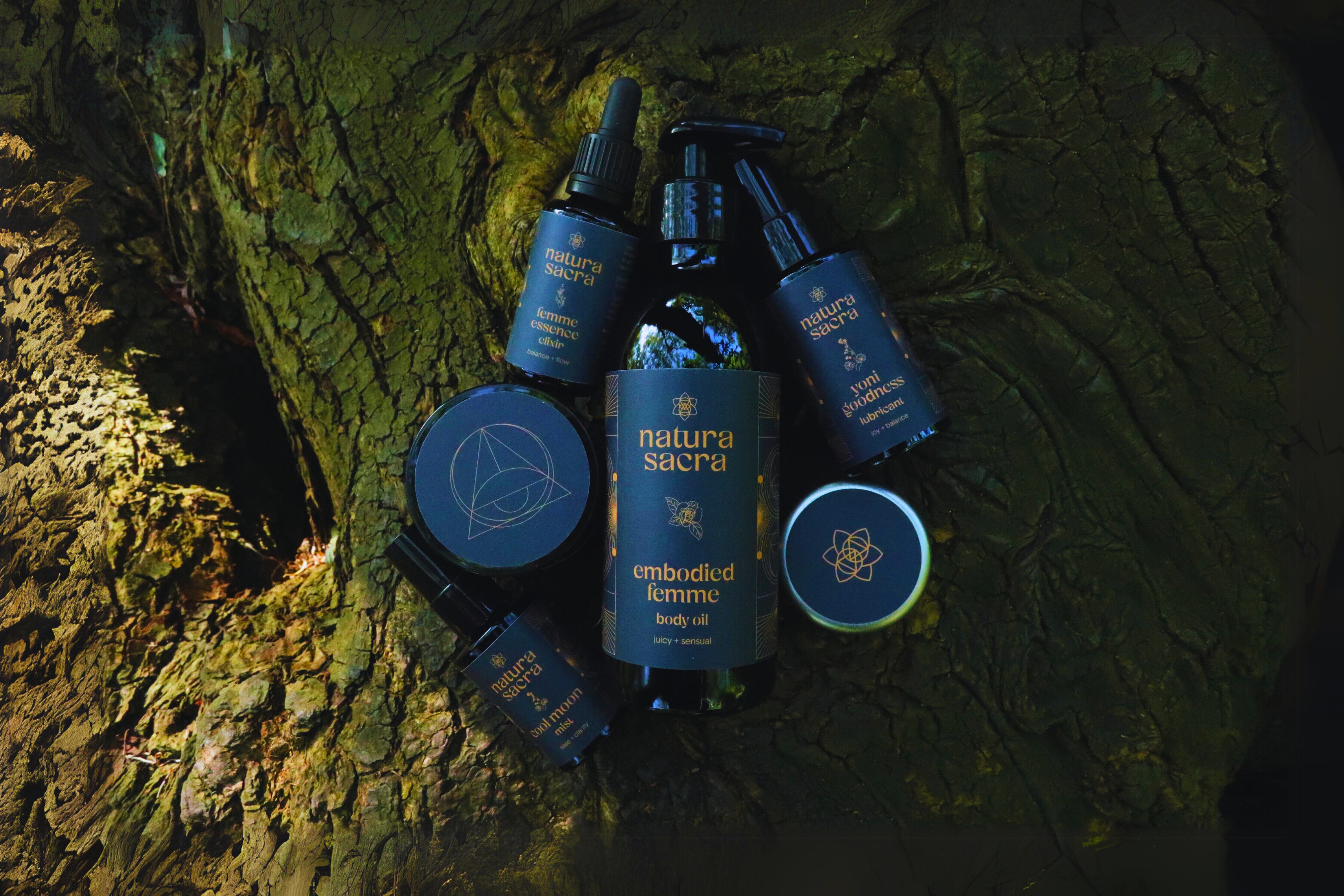
Zodra je lichaam wat zachter aanvoelt, kun je zachte massage toevoegen. Gebruik een kleine hoeveelheid van een eenvoudige kruidenlichaamsolie – bijvoorbeeld een die is geïnfuseerd met bijvoet, roos en ylang ylang, zoals Embodied Femme Body Oil – en masseer de onderbuik en onderrug.
- Gebruik kleine cirkels met de klok mee op de onderbuik, de vorm van de baarmoeder volgend tussen de heupbeenderen.
- Glijd met je handen van de zijkanten van de heupen naar het heiligbeen, waardoor de bloedstroom naar het midden wordt gestimuleerd.
- Maak brede cirkels over het heiligbeen en de bovenkant van de billen, waar veel mensen een diepe pijn voelen.
Houd de druk licht tot matig. Het doel is om de bloedsomloop te stimuleren en veiligheid te signaleren, niet om door pijn heen te duwen. Als het ondersteunend aanvoelt, kan een partner ook helpen met deze stap, vooral voor de onderrug.
Stap 4 – Zenuwstelsel vertragen (ademhaling & houding)
Pijn wordt verwerkt in het zenuwstelsel, dus werken met ademhaling kan de intensiteit van krampen echt veranderen. Een eenvoudig patroon is voldoende:
- Adem in door de neus gedurende 4 tellen.
- Adem uit door de neus of mond gedurende 6-8 tellen.
- Herhaal dit 3-5 minuten, houd schouders, kaak en handen zo ontspannen mogelijk.
De iets langere uitademing helpt de parasympathische ("rust en verteer") tak van het zenuwstelsel te activeren. Dit laat krampen niet verdwijnen, maar het kan het algehele gevoel van alarm verminderen en de pijnintensiteit verzachten.
Als je tijdens het ademen graag een eenvoudige interne zin gebruikt, kun je iets aardende gebruiken zoals: "Ik test wat mijn lichaam door deze cyclus heen helpt", in plaats van emotionele affirmaties die niet echt aanvoelen.
Stap 5 – Zachte beweging voor bekken en onderrug (indien mogelijk)
Op dagen dat je wat kunt bewegen, kan zachte mobiliteit stijfheid verminderen die krampen en rugpijn erger doet aanvoelen. Houd bewegingen klein en binnen een comfortabel bereik.
- Bekkenkantelingen liggend op je rug – wieg het bekken langzaam om de onderrug tegen de vloer te drukken en dan weer los te laten.
- Knieën-naar-borst variatie – breng één knie tegelijk naar je borst, dan beide samen als het comfortabel is.
- Kleine heupcirkels – liggend of op handen en knieën, teken langzame cirkels met je knieën of bekken.
- Een langzame wandeling van 3-5 minuten door de kamer om de bloedsomloop op gang te houden na je ritueel.
Als beweging de pijn verergert, sla dan deze stap over. Je ritueel is bedoeld om te ondersteunen, niet om een extra belasting voor je systeem te zijn.
Ondersteuning vóór de cyclus: pijn verminderen voordat het begint
Wat je doet in de dagen voorafgaand aan je menstruatie kan van invloed zijn op hoe intens krampen en rugpijn aanvoelen zodra de bloeding begint. In plaats van te wachten tot dag één, kun je experimenteren met een paar eenvoudige gewoonten in de late luteale fase.
- Drink dagelijks een ondersteunende kruidenthee (zoals een frambozenblad- en vrouwenmantelmix) in de 3-5 dagen voor je menstruatie.
- Geef prioriteit aan slaap waar mogelijk, aangezien slechte slaap de pijngevoeligheid verhoogt.
- Voeg regelmatig magnesiumrijke voedingsmiddelen en ontstekingsremmende vetten toe, niet alleen op menstruatiedagen.
- Houd lichte beweging in je week – korte wandelingen, stretchen of lichte intensiteitsoefeningen om de bloedsomloop te ondersteunen.
- Werk met een cyclusondersteunend elixer, zoals Femme Balance Elixir, als het past bij je routine en gezondheidssituatie.
Het doel is om een basis te leggen die je lichaam veerkrachtiger maakt voordat krampen en lage rugspanning hun hoogtepunt bereiken. Het bijhouden van je symptomen over meerdere cycli kan je helpen zien welke veranderingen echt nuttig zijn.
Mythe versus feit: Menstruatiekrampen & rugpijn
-
Mythe: Ernstige menstruatiepijn hoort er gewoon bij als vrouw.
Feit: Intense of invaliderende pijn kan duiden op aandoeningen zoals endometriose, adenomyose of vleesbomen en verdient een juiste medische beoordeling.
-
Mythe: Rugpijn tijdens je menstruatie betekent altijd dat er een probleem is met je ruggengraat.
Feit: Menstruatiegerelateerde rugpijn is vaak uitstralende pijn vanuit de baarmoeder en omliggende bekkenstructuren, niet noodzakelijkerwijs een ruggengraatprobleem.
-
Mythe: Als pijnmedicatie niet volledig werkt, zal niets anders helpen.
Feit: Een combinatie van medische behandeling, veranderingen in levensstijl, warmtetherapie en kruidenondersteuning kan de pijnintensiteit na verloop van tijd vaak verminderen.
-
Mythe: Als natuurlijke middelen krampen niet in één maand verhelpen, zijn ze nutteloos.
Feit: Kruiden- en leefstijlbenaderingen moeten meestal consistent over meerdere cycli worden gebruikt voordat verbeteringspatronen duidelijk worden.
Wanneer moet je een arts raadplegen over menstruatiekrampen en rugpijn?
Hoewel natuurlijke remedies en rituelen aanzienlijke ondersteuning kunnen bieden, is het belangrijk om geen tekenen over het hoofd te zien die erop kunnen wijzen dat er meer aan de hand is. Raadpleeg medisch advies als je het volgende opmerkt:
- Zeer zware bloedingen (zoals het doorweken van maandverband of tampons elk uur gedurende meerdere uren).
- Plotselinge, ernstige pijn die anders aanvoelt dan je gebruikelijke krampen.
- Pijn die maand na maand erger wordt of aanhoudt buiten je menstruatieperiode.
Aandoeningen zoals endometriose, adenomyose, vleesbomen, bekkenontstekingsziekte of, in zeldzame gevallen, een buitenbaarmoederlijke zwangerschap, vereisen medische evaluatie. Kruiden, voeding en rituelen kunnen nog steeds een rol spelen in comfort en veerkracht, maar ze moeten naast professionele diagnose en zorg bestaan.
Alles samenbrengen: Creëer je eigen menstruatiecomfortritueel
Menstruatiepijn die uitstraalt naar de onderrug is echt en gelaagd. Het omvat baarmoedercontracties, bekkenanatomie, ontsteking, gevoeligheid van het zenuwstelsel en levensstijlfactoren zoals slaap en stress. Er is zelden een enkele knop om om te zetten.
Warmte, kruiden en eenvoudige zenuwstelseloefeningen "fixen" niet alles, maar ze kunnen wel veranderen hoe je lichaam elke cyclus doormaakt. Een warmwaterkruik, een verwarmende kruidenthee, zachte buik- en sacraalmassage, een paar minuten verlengde uitademingen en een korte wandeling zijn allemaal kleine, toegankelijke hulpmiddelen die na verloop van tijd optellen.
Je hoeft niet elke suggestie in deze gids tegelijkertijd over te nemen. Kies een of twee elementen die realistisch aanvoelen – misschien warmte en thee, of massage en ademhaling – en blijf nieuwsgierig naar hoe je krampen, stemming en spanning in de onderrug reageren over meerdere maanden. Van daaruit kun je beslissen of je meer kruidenondersteuning of veranderingen in levensstijl wilt toevoegen.
Als je wilt werken met kant-en-klare mengsels, is de vrouwengezondheidscollectie van Natura Sacra – inclusief Embrace-me Thee, Femme Balance Elixir en Embodied Femme Body Oil – gemaakt om precies in dit soort rituelen te passen. Maar de kern van het werk blijft hetzelfde: je lichaam begrijpen, luisteren naar de patronen ervan en stabiele, praktische ondersteuning opbouwen voor elke cyclus.
Belangrijkste punten: Natuurlijke verlichting voor menstruatiekrampen & lage rugpijn
- Menstruatiekrampen komen van baarmoedercontracties, veroorzaakt door prostaglandines, en de baarmoeder deelt zenuwbanen met de onderrug en heupen. Daarom uit menstruatiepijn zich vaak als een diepe pijn in het heiligbeen en de wervelkolom, niet alleen in de onderbuik.
- Verwarmende kruiden voor menstruatiekrampen – zoals gember, kaneel en traditionele baarmoederverwarmers zoals bijvoet – kunnen de bloedsomloop ondersteunen, krampen verminderen en comfort bieden, vooral in combinatie met warmtetherapie.
- Baarmoederondersteunende kruiden zoals vrouwenmantel, frambozenblad en brandnetel worden traditioneel gebruikt om de doorbloeding te ondersteunen, spanning te verlichten en mineralen aan te vullen, terwijl nervine kruiden zoals kamille, citroenmelisse en tulsi helpen bij stemming, slaap en stressgerelateerde pijngvoeligheid.
- Een eenvoudig, herhaalbaar Menstruatiecomfortritueel – met warmte op de buik en onderrug, een verwarmende kruidenthee, zachte buik- en heiligbeenmassage, rustgevende ademhaling en lichte beweging – kan ongemak na verloop van tijd verminderen wanneer het consistent wordt beoefend.
- Voedingskeuzes kunnen een verschil maken: ontstekingsremmende, magnesiumrijke voedingsmiddelen en warme vloeistoffen ondersteunen vaak menstruatiecomfort, terwijl sterk bewerkte voedingsmiddelen, overtollige suiker, cafeïne en alcohol bij sommige mensen krampen en een opgeblazen gevoel kunnen verergeren.
- Kruiden en rituelen zijn complementaire hulpmiddelen. Ernstige, plotselinge of veranderende pijn, zeer zwaar bloedverlies of pijn die het dagelijks leven belemmert, moet altijd met een zorgverlener worden besproken om onderliggende aandoeningen uit te sluiten.
Probeer dit vanavond: 20-minuten Menstruatiecomfort Reset
Zet een sterke kop verwarmende kruidenthee – bijvoorbeeld een frambozenbladmix met kamille en brandnetel – en voeg een schijfje verse gember of een kaneelstokje toe als je deze goed verdraagt. Terwijl het trekt, plaats je een warmwaterkruik op je onderbuik en, indien mogelijk, een andere op je onderrug of heiligbeen. Blijf hier minstens 10–15 minuten, adem 4 tellen in en 6–8 tellen uit, en laat je schouders en kaak ontspannen. Sluit af met een paar minuten zachte buik- en lage rugmassage met een eenvoudige kruidenlichaamsolie, en merk op of je krampen, stemming of rugspanning daarna zelfs maar een beetje anders aanvoelen.